
 Let me win, but if I cannot win, let me be brave in the attempt.
100% of all donations will go directly to Special Olympics Washington.
Home from South Korea
Hello everyone,
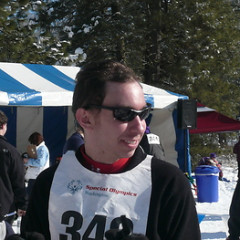
i had a great and awesome time in Pyeongchang, South Korea seeing all the cool sights and walking around Seoul. The competition was tough but great. I came in 1st in the 2.5K and 3rd in the 1K and 5th in the 4 x 1k relay. The coaches were awesome. It was fun seeing different people from around the world. I made lots of new friends on my cross country team from Alaska, Utah, Maine, Pennsylvania, Colorado and lots of other places. Thank you to the people who donated to my cause. I’ll never forget this experience.
Love to all,
Ben Green
Update #4
Hello everyone,
i had a great and awesome time in Pyeongchang, South Korea seeing all the cool sights and walking around Seoul. The competition was tough but great. I came in 1st in the 2.5K and 3rd in the 1K and 5th in the 4 x 1k relay. The coaches were awesome. It was fun seeing different people from around the world. I made lots of new friends on my cross country team from Alaska, Utah, Maine, Pennsylvania, Colorado and lots of other places. Thank you to the people who donated to my cause. I’ll never forget this experience.
Love to all,
Ben Green
On the way to South Korea
Ben is on his way to South Korea. This article appeared in today’s Seattle paper:
6 state skiers on their game for Special Olympics in South Korea
Six Washington-based skiers will travel to Korea this week for the 2013 Special Olympics World Winter Games.
By Jack Broom
Seattle Times staff reporter
The secret to success in an Olympic event is really no secret at all.
“You just get out there. Work hard. And do your best.”
So says Seattle’s Ben Green, 27, who’s among six Washington skiers departing Thursday morning for the Special Olympics World Winter Games in Pyeongchang, South Korea.
The advice from Green, a cross-country skier and grocery-store courtesy clerk, applies to many of life’s pursuits, which may help explain Special Olympics’ worldwide growth.
Nearly 3,300 athletes from 112 countries are expected in Pyeongchang for the games beginning Tuesday, more than a 30 percent increase over the number who attended the last winter games in 2009, held in Sun Valley and Boise, Idaho.
But the number of athletes at worldwide competitions is a tiny fraction of the 4 million worldwide regularly participating in Special Olympics events, created to offer people with intellectual disabilities the opportunity to work hard, set goals, learn skills and exercise teamwork.
“Some days are just gorgeous on the mountains,” said Michelle Jay, 43, of Sammamish, another cross-country skier in the Washington delegation.
Jay, a King County court clerk, says the sight of a groomed trail curving through a stand of snow-covered trees more than makes up for the strenuous effort the sport requires.
Being involved in a sport and seeing that she can steadily improve, she said, has helped her overall self-confidence.
Green concurs. He’s only skied for four years but has been involved in Special Olympics for 14, participating in basketball, bowling, softball and track and field.
“It makes me more confident that I can meet new friends and I can do good at my job,” he said.
Chicago in 1968
The roots of Special Olympics date back to groundwork laid in the 1950s and 1960s by the late Eunice Kennedy Shriver, whose siblings included not just a U.S. president and two senators, but a sister named Rosemary.
Often described as having mild “mental retardation,” Rosemary became permanently disabled after a lobotomy.
Shriver’s drive to help people like her sister, often shunned by society, led to the first international Special Olympics, which drew 1,000 athletes from the United States and Canada to Chicago’s Soldier Field in 1968.
In 2004, Special Olympics adopted the term “intellectual disabilities” to replace “mental retardation,” seen as carrying a stigma. Athletes participating in Special Olympics have a range of abilities and may have specific diagnoses such as Down syndrome, autism or cerebral palsy.
In this state, Special Olympics got its start in 1975 with strong support from Boeing, said Beth Wojick, CEO of Special Olympics Washington
Now, the state organization has an annual budget of $5 million and relies on a long list of corporations, foundations, clubs, schools, former Olympic athletes, individual donors — and the work of about 8,000 volunteers.
Across Washington state, about 11,000 athletes participated in Special Olympics events last year, more than double the number from six years earlier.
Schools have played a big role in that growth, Wojick said, thanks to a program in which students of intellectual disabilities and those of normal development play together in team sports, such as soccer.
“We’re on a mission here,” said Wojick. “We know there are so many athletes out there that need us, and we’re not going to stop until we get them.”
“Love to compete”
Special Olympics Washington is covering the $3,000 per-athlete expense of the two-week trip to South Korea, where athletes will stay in hotels and compete at sites that will host the regular Winter Olympics in 2018.
Dave Bishop, 48, of Seattle, is another cross-country skier on the team. He’s been skiing since his youth in New Hampshire, although that was primarily downhill skiing.
Bishop, who does a variety of jobs around the L’Arche Noah Sealth group home where he lives on Capitol Hill, said he’s a little nervous about traveling to Asia but looks forward to coming home with souvenirs — possibly including a medal.
Green, Jay and Bishop train each weekend during the ski season at Snoqualmie Pass with the nonprofit Skihawks Racing Team.
“They love to compete, they push through the difficulties, and they’re super-excited about going,” said the Skihawks’ head cross-country coach, Jenny Fry.
Washington’s delegation to Korea also includes three Eastern Washington-based skiers, Zachery Nelson, of Pasco; Heather Comer, of Spokane Valley; and Michelle Stedman, who lives across the state line in Lewiston, Idaho, but who skis in Washington.
All six are making their first trip to a Special Olympics World Games, gaining their spots by earning gold medals in their events at last year’s state winter games in Wenatchee.
The state will also be represented by marathoner Andy Bryant of Seattle, one of eight athletes selected to carry the games’ “Flame of Hope.”
They’ll all need to get up super-early Thursday: A send-off rally is planned for 5:45 a.m. at the Alaska Airlines check-in area at Seattle-Tacoma International Airport before the group’s 8 a.m. flight to Los Angeles.
In L.A., they’ll meet up with the rest of the 151 athletes of Team USA, and then depart Friday on a flight to Seoul.
Update #2
Hi everyone. I just got back today from training camp in Lake Placid NY. It was awesome and great. I worked on endurance training by climbing up ski jumps with my ski poles, I had a coach that had us run around Lake Placid every morning before breakfast, I was a model at the fashion show for Team USA gear, I met new friends and coaches, They had a Korean Tae Kwon Do demonstration, and i had a lot of 3 am morning,s to get to the airport. Tomorrow i am going to start training with Shelly, one of my coaches on the slopes. I am really looking forward to Korea and Competing!!!
Update #1
Thanks to everyone who has donated. Remember to click on my picture to donate to me.
Ben