Three Takeaways from the ‘Ask5for5′ Campaign
posted September 23, 2011 by Sean
The Ask5for5 Campaign, launched by SeeYourImpact supporter and nonprofit crusader Sarah Lenssen, has been a huge success. Nearly $10,000 in the last 5 days! We are forever grateful because children, families and communities will now have more of the necessary, life-saving food and water. But like any initiative or undertaking, there is a great deal of planning that goes into it. Our staff felt there were three key takeaways from the Ask5for5 Campaign for famine relief:
1. Organizing – Sarah Lenssen has been amazing. She made calls, sent emails, arranged meetings, and laid the foundation. And when she couldn’t do it, she appointed people who could. A campaign of this magnitude took hours and hours to set up. There is no substitute for hard work.
2. Bloggers – From the beginning, it was bloggers who powered this campaign. Moms, dads, students, social media professionals, journalists, and others from every corner of the globe, spreading the word about the campaign. A sizeable, dedicated group of bloggers can make the world stand up and take notice.
3. Social Media is Important – Though there is still resistance in many quarters, people do see the power of platforms like Twitter, Facebook, GooglePlus, LinkedIn, etc. It’s not just about posting. More than anything, it’s about “participating”: saying hello, engaging a suggestion, encouraging a positive idea some put on your page. It’s adds authenticity to what you do. Our social media community is just amazing!
These are just three of the ingredients, but there are among the most important.
As SeeYourImpact.org looks to the future, we will build on these and other points from our campaigns. We have a great support network around the world. They make it all possible. And they help make everything we do worthwhile. From everyone on our staff, we thank you for helping to make Ask5for5 a success during International Social Media Week.
Read more »
Giving Back With the #Ask5for5 Campaign
posted September 19, 2011 by Sean
When SeeYourImpact supporter Sarah Lenssen launched her ambitious Ask5for5 initiative in August, everyone knew it would make a difference. Ending famine in East Africa is not only personal for her; it is an achievable goal. In just six weeks, Ask5for5 has raised an amazing $23,000 (as of this posting) with the help of an ever-growing group of small donors, bloggers, and social media enthusiasts.
Sarah believes the response to a crisis must be equal (if not greater) than the size and scope of it. So she is aiming to raise $40,000. This can be done. Giving $5, and getting just 5 of our friends to give $5. And each of their friends can contribute. Indeed, we can help relieve extreme hunger!
As you will see below in Sarah’s guestpost, she is serious in her thoughts and actions. We are happy to support her efforts. What a great cause!
![]() |
Guest Blogger: Sarah Lenssen from #Ask5for5
Family photos by Mike Fiechtner Photography
Thank you SeeYourImpact and nearly 150 other bloggers from around the world for allowing me to share a story with you today, during Social Media Week.
A hungry child in East Africa can’t wait. Her hunger consumes her while we decide if we’ll respond and save her life. In Somalia, children are stumbling along for days, even weeks, on dangerous roads and with empty stomachs in search of food and water. Their crops failed for the third year in a row. All their animals died. They lost everything. Thousands are dying along the road before they find help in refugee camps.
At my house, when my three children are hungry, they wait minutes for food, maybe an hour if dinner is approaching. Children affected by the food crisis in in Ethiopia, Kenya, and Somalia aren’t so lucky. Did you know that the worst drought in 60 years is ravaging whole countries right now, as you read this? Famine, a term not used lightly, has been declared in Somalia. This is the world’s first famine in 20 years.12.4 million people are in need of emergency assistance and over 29,000 children have died in the last three months alone. A child is dying every 5 minutes. It it estimated that 750,000 people could die before this famine is over. Take a moment and let that settle in.
The media plays a major role in disasters. They have the power to draw the attention of society to respond–or not. Unfortunately, this horrific disaster has become merely a footnote in most national media outlets. News of the U.S. national debt squabble and the latest celebrity’s baby bump dominate headlines. That is why I am thrilled that nearly 150 bloggers from all over the world are joining together today to use the power of social media to make their own headlines; to share the urgent need of the almost forgotten with their blog readers. Humans have the capacity to care deeply for those who are suffering, but in a situation like this when the numbers are too huge to grasp and the people so far away, we often feel like the little we can do will be a drop in the ocean, and don’t do anything at all.
![]() |
When news of the famine first hit the news in late July, I selfishly avoided it. I didn’t want to read about it or hear about it because I knew I would feel overwhelmed and uncomfortable. I wanted to protect myself. I knew I would need to do something if I knew what was really happening. You see, this food crisis is personal. I have a 4-year-old son and a 1 yr-old daughter who were adopted from Ethiopia and born in regions now affected by the drought. If my children still lived in their home villages, they would be two of the 12.4 million. My children: extremely hungry and malnourished? Gulp. I think any one of us would do anything we could for our hungry child. But would you do something for another mother’s hungry child?
My friend and World Vision staffer, Jon Warren, was recently in Dadaab Refugee Camp in Kenya–the largest refugee camp in the world with over 400,000 people. He told me the story of Isnino Siyat, 22, a mother who walked for 10 days and nights with her husband, 1 yr-old-baby, Suleiman, and 4 yr.-old son Adan Hussein, fleeing the drought in Somalia. When she arrived at Dadaab, she built the family a shelter with borrowed materials while carrying her baby on her back. Even her dress is borrowed. As she sat in the shelter on her second night in camp she told Jon, “I left because of hunger. It is a very horrible drought which finished both our livestock and our farm.” The family lost their 5 cows and 10 goats one by one over 3 months, as grazing lands dried up. “We don’t have enough food now…our food is finished. I am really worried about the future of my children and myself if the situation continues.”
Will you help a child like Baby Suleiman? Ask5for5 is a dream built upon the belief that you will.
That something I knew I would need to do became a campaign called #Ask5for5 to raise awareness and funds for famine and drought victims. The concept is simple, give $5 and ask five of your friends to give $5, and then they each ask five of their friends to give $5 and so on–in nine generations of 5x5x5…we could raise $2.4 Million! In one month, over 750 people have donated over $25,000! I set up a fundraiser at See Your Impact and 100% of the funds will go to World Vision, an organization that has been fighting hunger in the Horn of Africa for decades and will continue long after this famine has ended. Donations can multiply up to 5 times in impact by government grants to
help provide emergency food, clean water, agricultural support,
healthcare, and other vital assistance to children and families suffering in the Horn.
I need you to help me save lives. It’s so so simple; here’s what you need to do:
- Donate $5 or more on this page (http://seeyourimpact.org/members/ask5for5)
- Send an email to your friends and ask them to join us.
- Share #Ask5for5 on Facebook and Twitter!
I’m looking for another 100 bloggers to share this post on their blogs throughout Social Media Week. Email me at ask5for5@gmail.com if you’re interested in participating this week.
A hungry child doesn’t wait. She doesn’t wait for us to finish the other things on our to-do list, or get to it next month when we might have a little more money to give. She doesn’t wait for us to decide if she’s important enough to deserve a response. She will only wait as long as her weakened little body will hold on…please respond now and help save her life. Ask 5 for 5.
Thank you on behalf of all of those who will be helped–you are saving lives and changing history.
p.s. Please don’t move on to the next website before you donate and email your friends right now. It only takes 5 minutes and just $5, and if you’re life is busy like mine, you probably won’t get back to it later. Let’s not be a generation that ignores hundreds of thousands of starving people, instead let’s leave a legacy of compassion. You have the opportunity to save a life today!
Read more »
Ending Famine in East Africa
posted August 18, 2011
10 million people face extreme hunger right now in the East Africa Countries if Ethiopia, Kenya, and Somalia. A nightmare scenario is clearly unfolding on the ground with the region’s worst drought in 60 years. This moved SeeYourImpact supporter Sarah Lenssen to create a fundraiser that would catch people’s attention. Called Ask5for5, it asks that you give $5, and then get 5 of our friends to give $5.
The results have been phenomenal since its launch on August 12th. In the first two hours, she raised over $1000. She then raised over $6000 in the first three days. Moved by her generosity, and by the knowledge that two of her adoptive children are from that region, many donors have emailed her campaign and shared it on popular platforms like Facebook and Twitter.
On Thursday August 18th, over 25 bloggers including Jenni Hogan, will band together to spread the word about the famine in East Africa. This project is resonating! Below is a guest post by Sarah Lenssen, a passionate supporter of SeeYourImpact, who believes in making a difference and responding strong to the situation in East Africa.
photos courtesy of Cate Turton / Dept. for International Development
First, thanks to SeeYourImpact.org for allowing me to post on their blog today! Today, more than 25 bloggers, including this one, are standing with me to Ask 5 for 5 for Africa. Here’s why….
I began pursuing a BIG dream two weeks ago. After deciding I could no longer avoid the news about the famine in the horn of Africa, I had that gut feeling that I couldn’t sit this one out. I HAD to do something because I could. Something bigger than I could do alone. That’s when #Ask5for5 was born.
Two of my children, Ashen and Bereket, were adopted and are from the region affected by the drought in Ethiopia. They would be two of the statistics if they still lived there. I see my son’s and daughter’s faces in the photos of those suffering in the refugee camps. It could have been him. It could have been her. The thought haunts me.
And moms just like us are watching their children go hungry day after day. I can’t imagine what it’s like, but I have to –I have to be there to help them, because it could have been my children. These families have lost their livestock, their crops, food prices are inflated at the market if there any food there, and don’t have any more lifelines to tap into. Many are traveling hundreds of miles through parched land in hope of finding help. Many are dying along the way. It is estimated that 29,000 children have died in the last 90 days in the famine in Somalia alone.
But I KNOW we can do something about it. Instead of feeling overwhelmed and paralyzed, we can rally ourselves and our friends to respond! I set up a fundraiser through See Your Impact. 100% of your gift will go to the relief and development organization World Vision, where it will be combined with government grants to multiply up to 5 times in impact!
You’ll receive updates on just how your funding is being used to help save lives affected by famine in East Africa. I’m amazed at how much we’ve raised already — over $7,000 in just four days! We blew through our first 3 goals in just 3 days and are well on our way to $10,000 and beyond!
I need you to help me save lives. It’s so so simple; here’s what you need to do:
- Donate $5 or more on this page (http://seeyourimpact.org/members/ask5for5)
- Send an email to your friends and ask them to join us.
- Share Ask5for5 on Facebook and Twitter, and join our page to stay updated too!
I’m also looking for 100 bloggers to stand with Ask5for5 to spread the word during Social Media week, September 19th – 23rd. If you’re interested, email me, ask5for5@gmail.com.
Thanks! Please donate and email your friends right now–don’t wait for a calmer moment, because if you’re like me, other demands inevitably crop up and you won’t get to it. A child’s life hangs in the balance, but you can help save her!
A huge thanks to the following bloggers for participating. Their support has been a blessing to this campaign. If you’re not on the list, let us know! We couldn’t do it without you.
Confessions of a Graphic Designer
Read more »
FIFA’s World Cup Legacy
posted July 21, 2010
With the end of the World Cup the stadiums of South Africa have been silenced, the buzz of the vuvuzelas has (thankfully) faded and life has returned to normal. But in Khayelitsha the legacy of the World Cup won’t be measured by minutes played and goals scored. Success instead will be judged by lives saved. As part of FIFA’s goal to create a lasting social legacy in South Africa, the first “Football for Hope Center” opened in Khayelitsha on Dec 5th, 2009.
The Khayelitsha soccer center is just one of 20 centers that FIFA is building across the African Continent. The plan is part of FIFA’s “20 Centres for 2010″, an initiative to educate youth about HIV/AIDS through soccer. Used as a vehicle to education, soccer provides coaches/teachers the ability able to broach sensitive subjects. The soccer based curriculum has shown tremendous promise so far. Although FIFA’s project will be physically complete after the construction of the 20 facilities the centers’ real legacy will come years from now. As the students/players graduate from the centers they’ll take with them an education that will last a lifetime. With each center constructed FIFA has the opportunity to impact thousands of lives by teaching youth to make smart decisions over a lifetime.
FIFA did not go about this all alone however. GrassRoots Soccer developed the curriculum used by the facilities. The program called Skillz uses training and drills to educate youth aged 12-18 by creating connections between real life skills and soccer.
FIFA’s program is not complete yet. Currently 7 more centers are under development and by the end of 2012 all 20 centers will be complete.
In my opinion I think that 20 Centers is just a start but I applaud the creation of a solution that is not only sustainable but will last far past the sound of the World Cup’s last whistle.
What do you think of this innovative approach to youth AIDS/HIV education?
Read more »
Girls Education in Sierra Leone Africa
posted July 12, 2010 by Casey
In Sierra Leone over 2.7 million children, or 48 percent of the country’s entire population, live in poverty and few have the opportunity to obtain an education. Many families cannot afford to send more than one child to school, because of this families often opt to send their sons to school and not their daughters. Door of Hope works in Freetown, Sierra Leone providing top notch girls education in Africa.
Read more »
No More Missed School for Zainab
posted July 8, 2010 by Casey
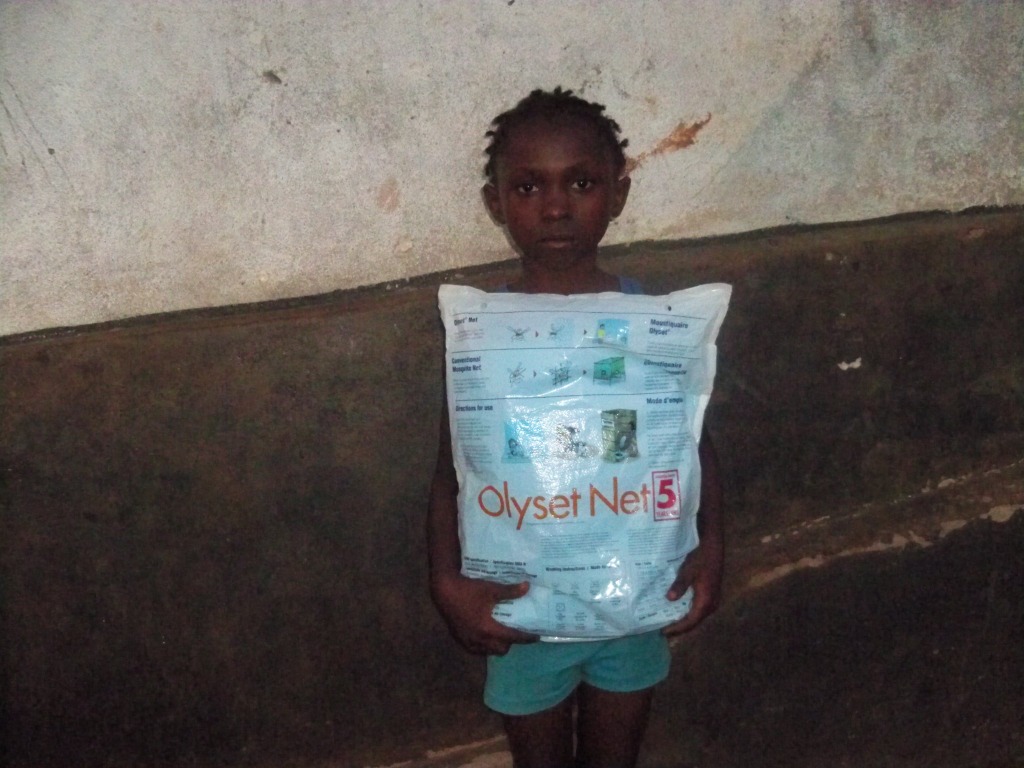
Zainab is a brilliant young girl from Sierra Leone who loves to go to and excels at school. Her schooling has been affected negatively by insufficient sleep due to the buzzing, mosquitoes’ bites and also bouts of the killer malaria disease.
Her parents are both school teachers and sometimes their salaries are not paid promptly by the government. This has introduced an extra economic strain on the family and as a result Zainab has had to, unfortunately, cope and sleep without a mosquito net. This has resulted in periodic bouts of malaria that have made her miss school for 1 – 2 weeks a few times a year.
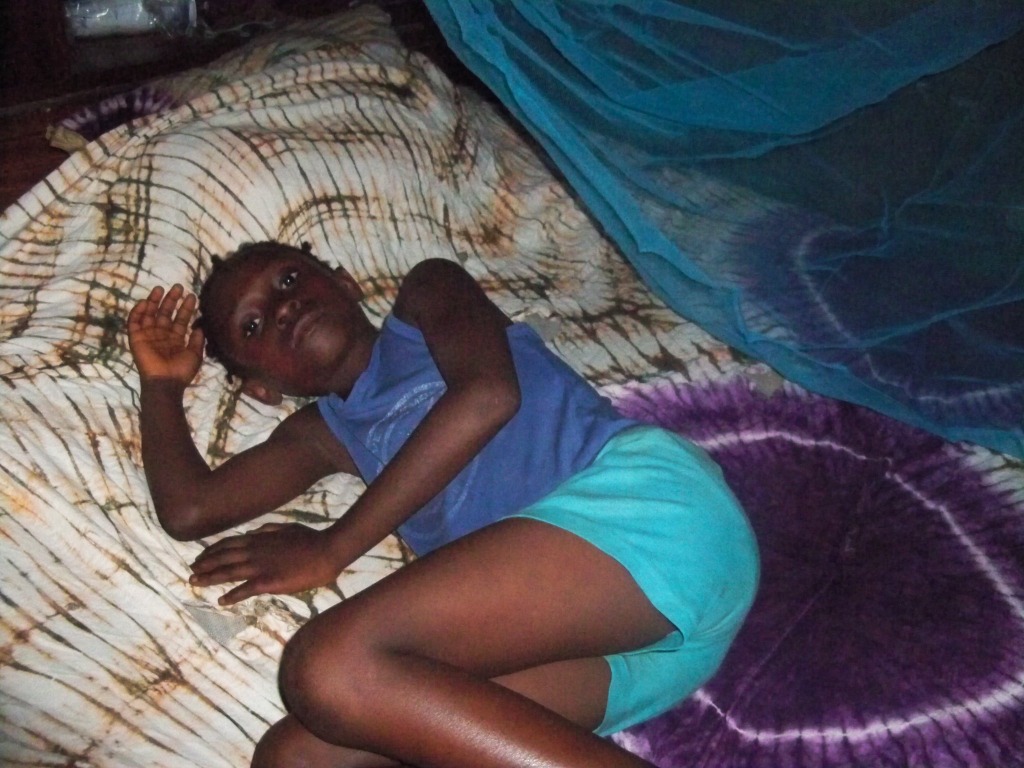
Zainab was delighted to receive a net as this helps guarantee sleep and freedom from malaria. Now she will no longer have to miss school from malaria.
Find out more about providing mosquito nets to children in Sierra Leone! Click Here
Read more »
A Bike: Radical Solution to Poverty?
posted July 6, 2010
Can a bicycle change a life?
An incredible transformation takes place when you ride a bike. The moment you start hurtling down the street you feel like a kid again. There’s something about bicycling that’s so freeing that it somehow removes our attachments and make us feel immediately younger. If you can’t tell already, I love riding bikes. This means that I’m super excited to announce our first bicycle charity at SeeYourImpact. Named the Village Bicycle Project what they do is simple yet makes a huge impact on lives.
The Difference a Bicycle can make
For millions in Africa taking a bus or a car is not an option. To get from place to place it is necessary to travel by foot for miles. Take the story of Abel a boy in Zimbabwe who travels nine miles on foot everyday just for the opportunity to attend high school. The head of his household, Abel is responsible for caring for his younger siblings. Abel’s one wish in the world? A bicycle to get him home faster to help take care of his family. The Village Bicycle Project looks to make stories like that of Abel’s history by providing bicycles, tools to repair them, and training for how to use the tools. Currently operating in Ghana, the Village Bicycle Project is furthered by the generous help of Peace Corps Volunteers who help distribute the bicycles to isolated rural villages. Owning a bicycle for recipients of the Village Bicycle Project is not simply a luxury like it is for many of us, including myself. It’s a vital method of transportation that can save precious time and energy.
Impact that lasts
One of my favorite parts of SeeYourImpact partners’ are that they provide an immediate impact you can see in the short term but are always thinking long term. The Village Bicycle Project is great example of this kind of sustainability. Bicycles are not just dropped off. Instead, recipients are trained and provided with the tools and the know how to keep their new rides running smooth. It’s a great way of knowing that the gift of a bicycle you provide is a solid investment in someone’s future. Another part of the gift that lasts forever is learning how to ride the bike. It’s a skill and a memory that will last longer than any bike ever will.
Can you remember who taught you how to ride a bike? Share your bicycling memories in the comments below!
Read more »
Country Profile – Rwanda – A Story of Hope
posted June 30, 2010
Rwanda Country Profile
The story of Rwanda is one of triumph over tragedy. In 1994, Rwanda drew the spotlight of the world when the two most populous ethnic groups, the Hutus and the Tutsis engaged in genocide against each other in which an estimated 800,000 people were killed. Today, Rwanda has bounced back and achieved incredible economic success with Fortune Magazine going as far to publish an article entitled “Why CEOs Love Rwanda”.
Quick Facts
Gained independence from Belgium July 1st, 1962
Rwanda is a member of the commonwealth of Nations but has no British Colonial past.
Rwanda is the only country in the world where women hold a majority in Parliament.
Rwanda is Africa’s most densely populated country with a population of 10 million and a land area of 10,169 (about the size of Maryland)
Rwanda’s Blue Bourbon Coffee recently won a Starbucks Black Apron Award.
Rwandan Civil War
In 1990 the Rwandan Patriotic Front (RPF), composed primarily of Tutsi refugees, invaded Rwanda through Uganda sparking the Rwandan Civil War. Strife between the Hutus and Tutsis was not new but rather a deadly continuation of a decades old conflict. The RPF fought until a cease-fire agreement was initiated in 1993. The cease-fire agreement abruptly ended in 1994 when the President of Rwanda, Juvénal Habyarimana, plane was shot down kill him. The shooting down of the plane sparked the beginning of the Rwandan Genocide. Tutsis and moderate Hutus were rounded and systematically killed over a period of a few short months. In the aftermath, the RFP took control of the government and banned discrimination based off of ethnicity, race, or religion.
A Booming Economy
In the aftermath of the Rwandan Civil War the country has seen incredible growth. Rwanda currently ranks 13th in the world for Industrial Production Growth Rate and 19th for GDP real growth rate. Additionally, per capita GDP has tripled since 1994 from $390 to $951. Approximately 90% of Rwanda’s population farms and farming makes up 39% of Rwanda’s GDP. One of Rwanda’s main crops and exports is their prize winning coffee.
Rwandan Coffee
In 2000 a feasibility study was conducted with USAID to explore how Rwandan farmers could add value to their coffee exports. Over the past decade Rwandan Coffee has gone from ordinary to Starbucks. By implementing standardization practices and using local African expertise coffee farmers in Rwanda are now teaching others how it’s done. As mentioned in the quick facts above Rwanda Coffee has reached an incredible level of excellence.
Our Partners in Rwanda
SeeYourImpact has partnered with Gardens for Health in Rwanda. By providing a sustainable source of food for HIV and AIDS patients Gardens for Health is changing the lives of families and individuals. I encourage you to visit the Gardens for Health website and give the gift of a home garden to help Rwandans with HIV and AIDS stay healthy.
Read more »
Country Profile – Ghana
posted June 28, 2010
SeeYourImpact recently partnered with the Village Bicycle Project our first partner in Ghana. With the addition of our new partner and the United States and Ghana having just played each other in the World Cup I thought it would be a perfect time for a country profile on Ghana.
Quick Facts
The word Ghana actually means “Warrior King”.
Ghana was the first sub-Saharan country to achieve independence.
Ghana is the second largest producer of Cocoa in the world.
Ghana enjoys a high level of free press.
Ghana is home to the largest artificial lake in the world, Lake Volta.
The Ashanti Empire
The modern nation of Ghana includes what was known as the Empire of Ashanti, one of the most powerful states in Sub-Saharan Africa prior to the arrival of colonial powers. The Akan people of the Ashanti Empire created a powerful state that lasted from 1670-1902. Their incredible military might defeated the British on several occasions and kept them largely independent from colonial powers until 1896. Even today the Ashanti monarchy still exists and is constitutionally protected by Ghana.
Ghana Football
A post on Ghana would not be appropriate without a mention of their famous soccer team. Affectionately known in their homeland as “The Black Stars”, for the black star that is represented on their flag, the the roster includes many players who play professionally all over the world. One of their most well know players is Michael Essien, a midfielder, who plays for Chelsea in the Premier League. Ghana’s National Team has won the Africa Cup of Nations four times behind only Egypt.
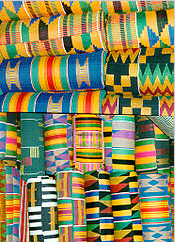
In Ghana, textiles are an important part of culture. Depending on the design and color the cloth can have different meanings.The Kente cloth specifically is a ceremonial cloth from the Ashanti that is hand woven on a treadle loom. Kente is more than just a piece of cloth. It is a visual history and amazingly is a form of written language created through weaving.
Challenges Today
Although Ghana enjoys a stable democracy and relative prosperity isolated rural communities still face many difficulties. One problem of significance is transportation. Consider that a typical trip to a village requires walking 9+ miles. The Village Bicycle Project alleviates this issue by providing bicycles to isolated rural communities.
Read more »
Home Gardens and Healthy Living
posted June 7, 2010
When we publish impact stories it reconnects me with our causes. I recently saw a few come in and I wanted to highlight the cause and what they’re doing. What our partners Gardens for Health does is simple in it’s approach. They provide home gardens for HIV/AIDS patients. I am a strong supporter of home gardens and sustainable agriculture but when I first heard this I asked a simple question, why?
Why Home Gardens?
The Gardens for Health website does a great job of drilling down into the problem. I am going to try to sum it up here. The incredible work of non-profits and organizations has made anti-retroviral therapy (ART) available and affordable across Africa. The issue is that when a patient lacks proper nourishment the ART lacks effectiveness. People living with HIV/AIDS have higher energy requirements, 10% in asymptomatic patients and 20-30% in symptomatic patients and up to 50-100% in children with weight loss. With such a lack of nutrition it is nearly impossible to stay completely healthy and avoid other illnesses. This is why Gardens for Health believes that to “tackle the HIV/AIDS crisis, malnutrition and HIV/AIDS must be addressed simultaneously.”
A Healthy Movement
I think the time is right for Gardens for Health. The profile of home gardens is rising in popularity in the United States. I don’t think we have to look very much further than Mrs Obama expanding the White House garden. Not only do gardens provide a sustainable method of providing food it can also be done affordably. A small donation can literally provide food for years. For me, it’s a great way to give and know that you’re gift has taken roots, literally!
I’m also particularly encouraged and inspired by the work of celebrities like Kimberly Snyder who show how home gardens can be grown and provide nutrition even in a big crowded city like New York. There are lessons we can learn from how impactful local urban gardens can be. I think that Gardens for Health is working with an incredible idea, it’s so exciting to see the impact stories that come in!
More resources/further reading
An article about gardening and changing lives for the better would be remiss without mentioning the Rodale Institute. Their twitter handle bio @RodaleInstitute reads “We improve the health and well-being of people and the planet.”They’re champions of organic farming and gardening and an incredible resource for anyone interested in the same. They provide proof (they’ve been doing it since 1947) that agriculture can be organic and sustainable.
Read more »